‘Slip Sliding Away’

It’s not often you get to see and experience the full perspective of a race. Watching the preparation, looking behind the scenes, understanding strategies, decisions and equipment choices.

I have just been fortunate enough to spend the last 10 days at two races; the Transvulcania La Palma in the Canaries and the Zegama race in the Pyrenees.

What was notable about these two races was the runners. Both races had arguably some of the best runners from the trail, ultra and mountain running scene. Both races also offered great contrast. The Transvulcania race was run in hot temperatures over some 50 miles. The Zegama race was marathon distance and took place in cold, wet and even some snow at the top of the mountains.

So, why the post?

Well, Zegama revealed many weaknesses and ultimately bad decisions by runners that seriously affected the ability at which they could perform. Yes! Even at the top of the sport, poor choices can be made.

What should you consider when racing?
1. What terrain will I be running on
2. What will the conditions be like
3. What variables do I need to consider
4. What clothing options will I need and shoe choices
5. Will I need ‘mandatory’ kit to race
6. Race day temperatures and variables
7. Will I need to be self sufficient or will they have feed stations
8. What pace will I run and how long can I expect the event to take
9. Best case scenario
10. Worse case scenario

The above questions are all completely relevant when undertaking any event. Certainly, the longer the event takes or the higher the event goes then the above list has even more relevance.

Assuming that your training is done. You have prepared meticulously and arrived at the race in the best form possible, why ruin it by making decisions or should I say, making a lack of decisions that will ultimately result in a below par performance or even worse, a DNF.

Zegama

As a reference point I am going to use the Zegama race. We arrived in the Pyrenees on Thursday two days before the race. Weather conditions were chilly and wet. On Thursday we attended press conferences, looked at the course and went out for a short 10k run covering a small section of the race route. I was with Mike Wolfe, Nick Clark, Ian Sharman and Marcus Warner. So, as you will note… Mike Wolfe was 2nd at 2011 Western States and Nick Clark was 3rd. Need I say more… Two very experienced ultra runners at the top of the game. We discussed the terrain on the run, the footing, the fact that it would be possible to run quick and as Mike and Nick said, this part of the course was Douche Grade meaning that it was easy. I guess they were right. This part of the course was downhill single track trail and a mix of rock, mud and grass. Mentally the guys made a decision that this was a quick and easy section.

The next day I ran the same section of course but this time went to the summit some 12k away and approximately a 1000m high. This time I was with Serge who is an R&D guy with Salomon. I was also joined by Marcus. Notably the previous night we had had thunder, lightening and torrential rain. A low lying mist covered the course making visibility a little poor but not problematic. The terrain was considerably muddier and much more slippery than the previous day. As we covered the course we discussed sections, looked at possible problems, discussed the weather, discussed temperatures, discussed footwear and then at the summit noted how cold it was. As we did all this I took photographs of sections.

That evening I saw Serge sit with Salomon Team Manager, Greg Vollet and Kilian Jornet and he talked them through step by step what we had done. He mentioned temperatures and he discussed shoes and made recommendations. Imperative. This information was then related to each runner within the team and they than had a team meeting. The information was relayed back to all the runners, clothing for the race was discussed, strategies for feeding/ nutrition planned and they then went to sleep armed with the required knowledge for the race.

By contrast, I showed my images to the other runners and by this I primarily mean the Americans. I relayed that it was potentially chilly on the tops particular if it was constant rain. I also mentioned that it was technical in places with rocks, mud, loose leaves and potential other hazards.

That night it never stopped raining…. Harder and harder. The following morning was considerably colder and snow was forecast for the summits. I had gone to the 7k checkpoint some 2 hours in advance of the race and relayed back by phone that it was cold and wet. At the 7k point the trail was a mud bath and slippery.

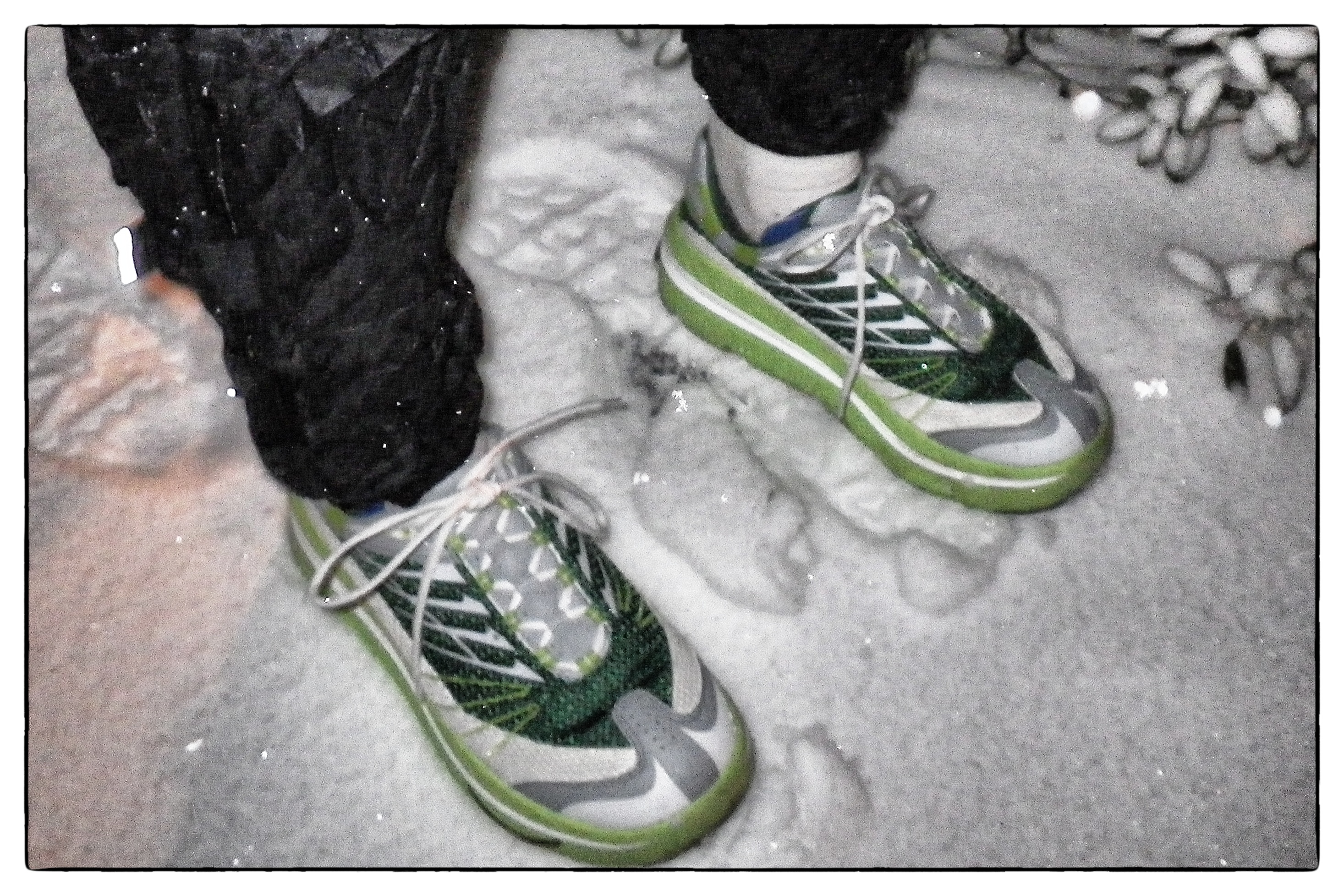
As the race unfolded and as I looked on at the, it was apparent that it was going to be a tough day, the front runners slipped away on the terrain. Of course good technique reduced some issues and good shoe choice also made a big difference. But it was apparent that a lack of technique and more importantly the wrong shoes could mean the difference between performing and surviving.

At the summits light snow was falling and then at the final summit a 13k decent lay ahead. Waiting near the last section of trail with just 2 km to the finish I watched runners appear. Firstly Kilian bouncing along like a mountain goat, then Hernando, Tom Owen and the first American, Mike Wolfe. It was a surprise to see Mike as pre expectations had touted Max King as a potential winner. Then Max King arrived not looking happy at all. One by one the Americans arrived and ran past me. As Joe Grant passed I asked how he felt. ‘Not good’ the reply.

Post race talk was about the terrain, the difficulty and more importantly the ability to run or survive the final descent. Although wet and although snow was falling at the summit, few runners said they had got really cold. Certainly the compulsory jacket had helped here! What was apparent though was the inability for many to stay upright.

Nick Clark said I had no grip
Joe Grant said ‘not sure road flats was a good idea…’
Mike Wolfe said ‘I had the wrong shoes’
Max King said ‘I was completely un prepared’
Lauren Jeska said ‘I am just not good on downhills, I couldn’t keep upright’ (importantly, Lauren was leading the women’s race and lost a podium place on the 13k decent, Emelie Forsberg was over 13 min behind Lauren at the top of the last climb but went past her and took 3rd place)
Ian Sharman wrote in his blog ‘It was fun to see what the Skyrunning guys do and to see really European-style races with huge amounts of vert and more technical running than back in the US. In fact, the mud, rain and snow of Zegama made me feel like I was on a fell run in northern England…just wish I’d had some fell shoes with me.’

I have to ask the question what preparation pre race was undertaken to make sure that nothing was left to chance?

It is appropriate here to make one or two defences.

A) The American contingent may very well have struggled with luggage/ baggage allowance that restricted the option to bring multiple shoes (I usually think running first and then bring what will fit after that)
B) Sponsored athletes may very well have not had a shoe available from the sponsors range for the conditions (not much you can do about this BUT Mike Wolfe can use any shoe he wishes as can Joe Grant)
C) Extreme weather that created out of the ordinary conditions (always expect the worst)

So although I provide some defence, between the lines I am sure you can read that ultimately they have no defence… School boy errors that could so easily be rectified. I liken the lack of prep to a new or novice runner.

Prep
Prep
Prep

These guys and girls can run, no doubt but it’s no good being one of the best if you throw it all away by doing a Paul Simon by that i mean, slip sliding away!
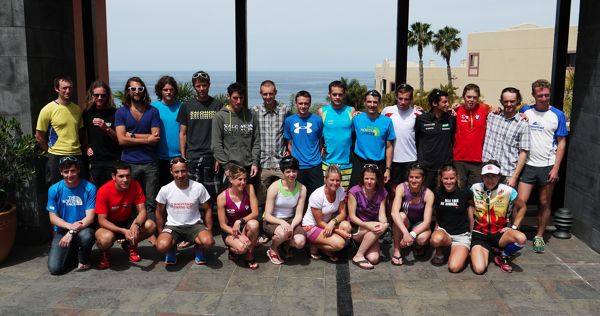
less cloud MORE SKY

2012 signifies a key moment in time for Skyrunning. Some 20 years ago, Marino Giacometti introduced a series of races to the world. In 1992 the first circuit was introduced. In the Alps on Adamello, Monte Rosa, Mont Blanc (summit) and then to Nepal for a race to Everest base camp at 5,200m altitude.

Over the years many mountains have been raced upon and many records have been broken, currently 23!

In 2008 it became a Federation, the ISF, International Skyrunning Federation. Currently the ISF has some 20 member countries and 3 associate members.

In an effort to continue delivering quality events and meeting the needs and goals of its participants, the industry and the sport, Skyrunning has evolved and that evolution has resulted at this significant moment in time, May 2012.

We are at the Transvulcania La Palma on the island of La Palma in the Canaries. Skyrunning have brought together one of the greatest ultra running fields ever, runners such as Kilian Jornet, Dakota Jones, Geoff Roes, Mike Wolfe, Erik Clavery, Sebastien Chaigneau, Joe Grant, D’Arcy Africa, Nikki Kimball, Anna Frost, Andy Symonds, Iker Karrera and so many more…

Yes, we ant to see a great race over what has been universally agreed as a ‘stunning course’ but Skyrunning also have another objective… With the race over and Dakota Jones crowned men’s champion and Anna Frost crowned ladies champion, a three day conference has been assembled to discuss the future of Skyrunning. It’s a key moment in time as not only is the Federation accepting that they need to move forward but they are also accepting that to move forward they need to listen to and discuss what the athletes, journalists, team managers and sponsors want. It’s refreshing to have such a forward thinking approach.

The conference ‘less cloud MORE SKY’ took place over three afternoons.

Day one showed all participants the history of Skyrunning. How it began, key moments, an introduction to the key athletes, a talk by ‘Sky Doc’ on the physical demands the sport places on its athletes and we also had some great video footage of races and events from the past.
Day two concentrated on media and in particular how social media can dictate how the sports future is made or broken. Athletes and journalists alike openly discussed how social media such as Facebook and Twitter are used to help get a message across to a media hungry public. Next day, a week later or even a month later is no longer acceptable for ‘News’. We want the news NOW and we expect it… It has it’s pros and it has it’s cons!
Day three I guess was the most important day. Although all participants had an opportunity to interact on the previous two days, day three discussed how the sport would progress and how the series would unfold. It was a great debate and all parties really did bring something to the table making Skyrunning look at its series of events, the locations that they use and how they can develop the sport so that European and non European runners have the opportunity to race on a level playing field.

Of course at this stage it was a point of discussion and the ISF now need to go away and discuss and bring together all that has been discussed over the last three days and formulate a plan for the future. It’s no easy task but I feel confident that in the hands of Marino Giacometti and Lauri Van Houten that the future of the sport is in safe hands. They are passionate about what they do, what they offer and they understand that although the sport needs to progress to the demands of the public, the participants and the sponsors they also know that they must not loose the roots of the sport and what makes it great.

With the inclusion of ‘Vertical’ and ‘Ultra’ circuits to the already very successful Skyrunner World Series the sport has exciting times ahead…

It is now important that we as athletes now work hard to ensure that our future in the sport is one of harmony, cohesion and importantly, as Marino and Lauri said, ‘in the spirit of the sport’ so that it’s future is secure.

We will face new challenges, new horizons and we must go to our respective home countries and/or federations and ensure that we remove the cloud so that we can all see MORE SKY!

Notes:

The ISF new formula world series offers a distance for every runner with three stand alone circuits and a combined title. Twenty spectacular races available across the world. Skyrunning offers more titles, more prize money and without a doubt, more kilometres and more altitude.

ISF MEMBER COUNTRIES
Andorra, Brazil, Bulgaria, Costa Rica, France, Great Britain, Greece, Hong Kong, Italy, Malaysia, Peru, Philippines, Portugal, Russia, Spain, South Africa, Switzerland, USA, and Venezuala.

Skyrunning Contacts
Skyrunning
info@skrunning.com

2012 CALENDAR
SKYRUNNER WORLD SERIES
Spain – Maraton Alpina Zegama-Aizikorri May 20
Italy – Giir Di Mont Skymarathon July 29
Switzerland – Course De Sierre-Zinal Aug 12
USA – Pikes Peak Marathon Aug 19
Malaysia – Mount Kinabulu Climbathon Oct 14

VERTICAL KILOMETER SERIES
Russia – Elbrus May 7
Greece – Gerania June 10
Italy – Dolomites Jul 20
Switzerland – Le KM vertical de Fully, Valais Oct 20
Spain – Puig Campana, Valencia Nov 11

SKYRACE SERIES
Russia – Elbrus May 9
Greece – Goura Coninth May 27
Italy – Dolomites Jul 22
UK – Snowdon Jul 21
France – Marathon Du Montcalm Aug 18

ULTRA SKYMARATHON
Spain – Transvulcania La Palma May 12
USA – Speedgoat 50k, Utah Jul 28
Italy – Trofeo Kima, Sondrio Aug 26
Spain – Cavalls de Vent, Pyrenees Sep 29
France – La Course des Templiers, Millau Oct 28

2012 SKY GAMES
RIBAGORZA ROMANICA, PYRENEES, SPAIN. JUNE 29 to JULY 8

Transvulcania La Palma Race Report

Transvulcania La PalmaInternational Skyrunning Federation

May 12th 2012

It was billed as the race of the decade and the 2012 Transvulcania La Palma race did not disappoint.

The International Skyrunning Federation had assembled one of the best mens field ever. It was a who’s who of ultra running; Kilian Jornet, Iker Karrera, Andy Symonds, Geoff Roes, Dakota Jones, Rickey Gates, Sebastien Chaigneau, Mike Wolfe, Francoise D’Haene, Casbeth Nemeth and in the women’s race, Anna Frost, Nikki Kimball, Darcy Africa, Corinne Favre and Nuria Picas.

From the perspective of an ultra running fan and a journalist, this was a race to be involved in. The first race held in 2009 had a main objective, to use the hiking paths that linked the island and fulfill the needs of the ever growing demand for long distance events. Starting at the Faro de Fuencaliente (lighthouse) the course follows the GR131/ GR130 route going up the Ruta des los Volcanes in the Cumber Nature Park making a total distance of 83km and a total elevation of 8525m. It borders the Caldera de Taburiente National Park and goes down to Puerto dee Tazacorte before rising up slightly to the finish in Los Llanos de Aridane.

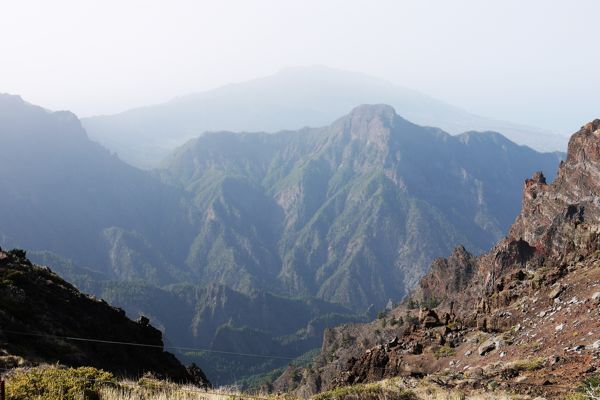
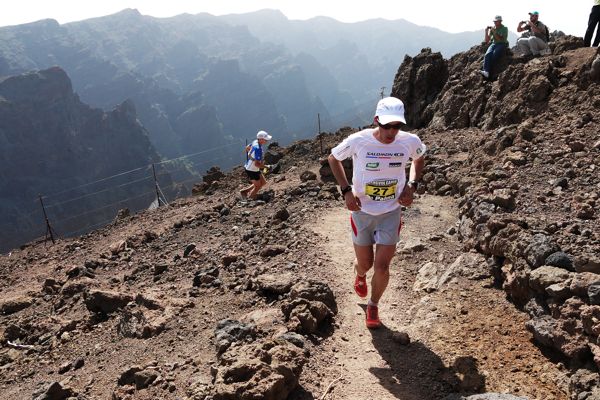
The race literally climbs some 53km fro sea level reaching the highest point on the course at 2426m and then drops down to sea level with a decent that the runners literally explained as ‘crazy’! The terrain is volcanic with black loose ash that moves under the feet, rutted and rocky terrain and of course the heat.

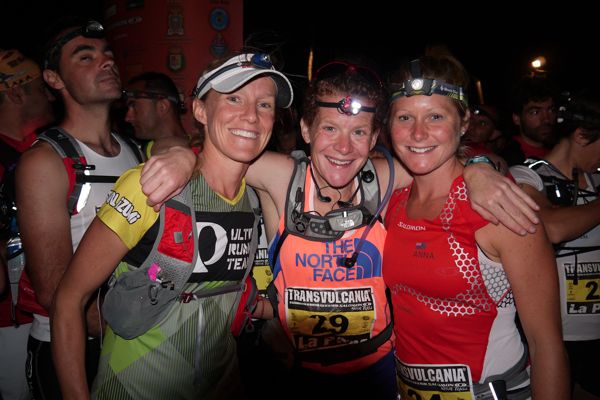
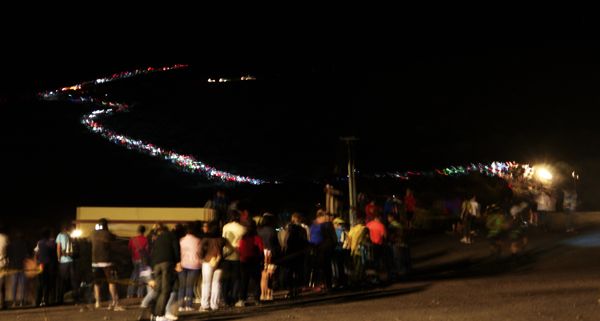
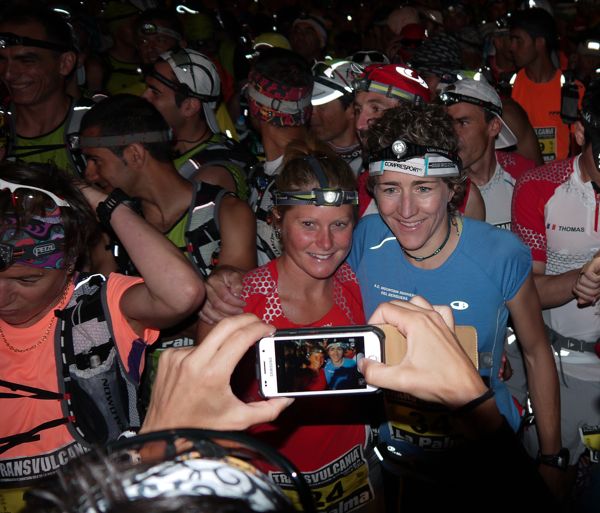
Leaving the start in pitch black at 0600hrs a stream of white headlamps moved towards the lighthouse, turned left and then headed up single track leaving a glow of flashing red lights in its wake. The early morning temperatures already gave us a sign that a hot day lay ahead.

Kilian Jornet, Dakota Jones, Andy Symonds made the initial running pushing up the trail. In the ladies race Anna Frost headed first up the trail and set a pace that showed she meant business.

The course climbed up from sea level to Las Deseadas and then dropped down to Refugio De El Pilar and then slowly climbed its way up to the high point of the course at Roque De Los Muchachos before a drop of some 20km to Tazacorte and the final kick in the tail to Los Llanos.

Kilian and Dakota forged ahead on the trail followed by Andy Symonds. Behind them Francoise D’Haene, Iker Karrera chased but the two guys up front looked strong.

In the women’s race Anna Frost, ‘Frosty’ as she is affectionately known pushed ahead at a pace that was leaving the other women in her wake but also most of the men. She was pursued by Nuria Picas, Nikki Kimball, Darcy Africa and Corinne Favre.

In the mens race, some pre race favourites were not having a great day, Mike Wolfe said after the race that ‘it just wasn’t happening’ but he did hold on for 14th overall . Geoff Roes said that he ‘felt like he was running in marshmallow’ and Sebastien Chaigneau complained of lower back pain and stomach issues. The latter two dropped from the race at Roque de los Muchachos.


Ultimately, Frosty dominated the women’s race and broke the course record by an incredible 1hr 45mins to record a time of 8:11:30. Her run and effort also secured her a place of 13th overall ahead of notable names such as Mike Wolfe, Ian Sharman, Gustavo Reyes and Csaba Nemeth. Second and third went to Nuria Picas in 8:51:59 and Nikki Kimball in 9:10:00 respectively. Nikki was stoked by her run saying that it was the first run in 4 years that she had gone without knee pain. The emotion was clear to see in her eyes.

The mens race eventually became a real nail biter. At the highest point of the race we had a perfect long distance view allowing us to see the runners approach from kilometers away. It was incredible to watch as first Kilian appeared and then Dakota locked head to head, foot strike to foot strike in battle. Snaking up and down the trail they approached us, went through the feed and left but then suddenly Andy Symonds from the UK was in sight closing the gap. At the summit he told us ‘I feel good, lets bring it on’. He left with arms outstretched like a plane and jumped gazelle like on to the tough and technical decent to Tazacorte.

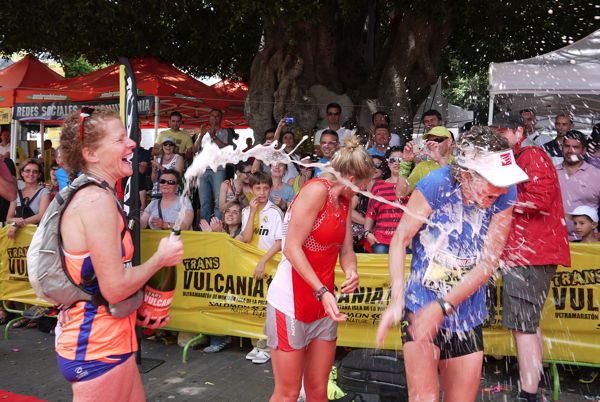
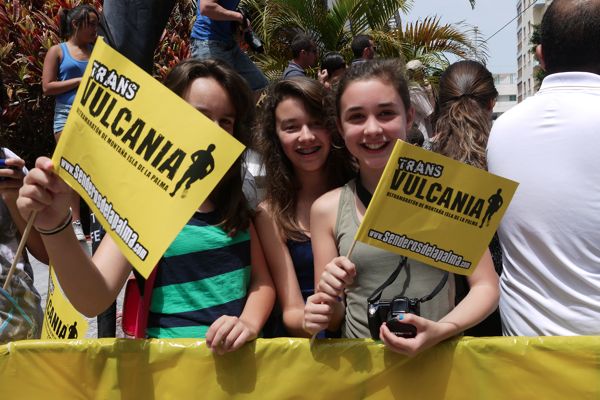
Waiting at the finish for the arrival of the runners it was party time. The whole town was out. It was like a stage finish of the The Tour de France or a section of the London Marathon course.

News came in that Andy Symonds had caught both Kilian and Andy on the decent and gone past them… apparently Kilian had followed and Dakota said after the race that he thought that was it and that ‘well, third will be good’.

But in Tazacorte Kilian was in trouble, maybe struggling from the heat, maybe struggling from dehydration or maybe just not on form after months of skiing. Andy was now in battle with Dakota but as he said immediately after the race ‘I just wasn’t strong enough, Dakota pulled away and I couldn’t keep up’. Dakota crossed the line in 6:59:07 smashing the old course record set in 2011 by Miguel Heras of 7:32:12.

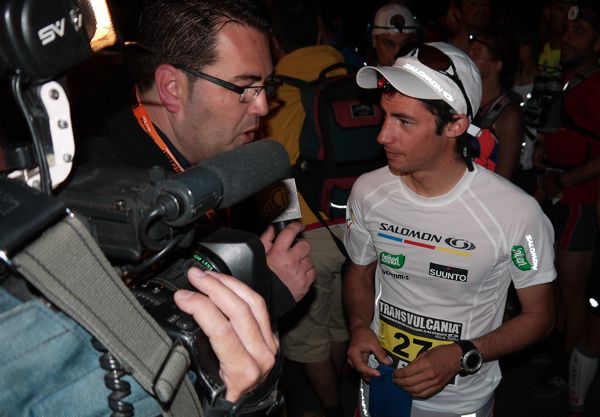
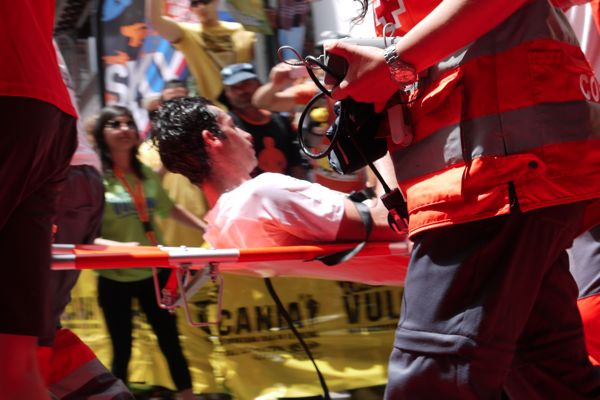
Andy arrived just 90 seconds later in 7:00:34 and Kilian arrived in 7:09:53. As he crossed the line his legs went from underneath him and he lay flat with exhaustion. Medics rushed to his aid and the crowd started to chant “Kilian, Kilian, Kilian” it was quite a moment and one that emphasized the importance of Kilian not only to the running community but to Spain alone. He later re emerged to speak to the crowd and assured them he was okay and thanked them for the support. He is a true ambassador.

Was the Transvulcania La Palma the race of the decade? Well from where I was on the course and at the finish, it sure was! However,  I do think it is a start of a new era in ultra running and I can only hope that what I witnessed on the Island of La Palma will be repeated time and time again. It’s a day and a race `I will never forget. Incredible. But in just a few days time we will be in Zegama… lets see what unfolds in the Pyrenees.

Mens Results

  1. Dakota Jones – Montrail – 6:59:07
  2. Andy Symonds – Salomon – 7:00:34
  3. Kilian Jornet – salomon – 7:09:53
  4. Francoise D’Haene – salomon – 7:23:40
  5. Iker Karrera – Salomon – 7:38:58

Women’s Results

  1. Anna Frost – Salomon – 8:11:30
  2. Nuria Picas – Icebug – 8:51:59
  3. Nikki Kimball – The North Face – 9:10:00
  4. Darcy Africa – Pearl Izumi – 9:17:35
  5. Uxue Azpeitia – 9:21:11

Hoka One One 2012 due to arrive March

HOKA ONE ONE

Introduction:

Hoka One One was the brainchild of Jean Luc Diard and Nicolas Mermoud. Both very experienced adventure racers and runners. Nicolas Mermoud has placed very highly at UTMB.

They set themselves an objective. To create a shoe that reduced fatigue, impact and muscle strain. Hoka One One was born.

Sponsored Athletes include: Dave Mackey (ultra runner of the year), Christophe Le Saux, Ludovic Pommeret, Maud Combarieu and Karl Meltzer (31 100 mile wins)

The Technology behind the shoe:

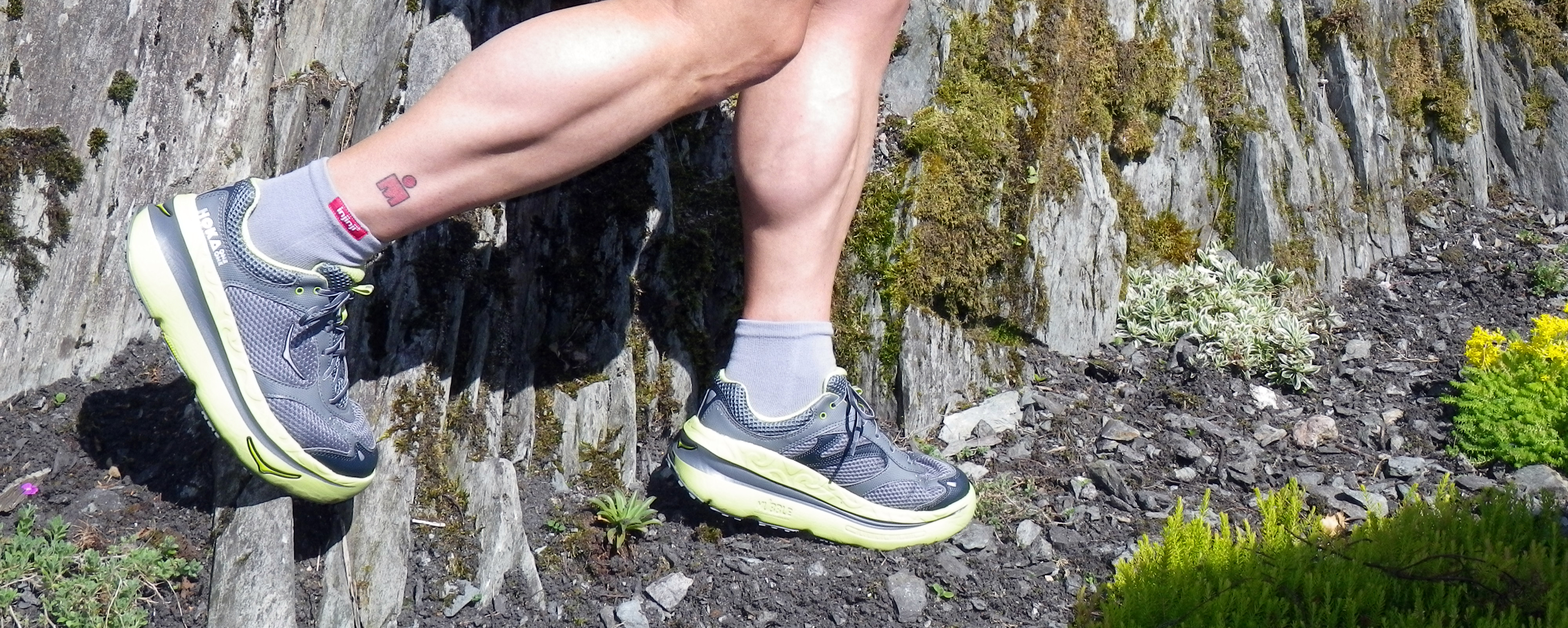
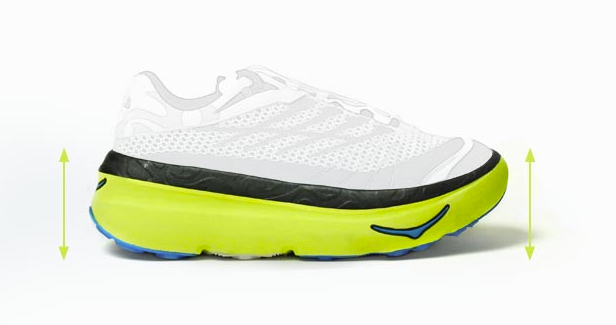
  • The sole is oversized up to 2.5x a conventional run shoe and therefore offers outstanding impact resistance. It ensures a natural stride and IMPORTANTLY they only have 4mm drop from heel to toe. They are therefore very much inline with the barefoot philosophies of natural foot strike and mid to forefoot running. In addition, the shoe eradicates any harshness from the terrain, allowing you to ‘run over’ obstacles. A good analogy would be the difference between a no suspension mountain bike and one with full suspension.
  • Within the shoe, your foot sits within a ‘bucket’ that is recessed into the sole. Not only does this offer a precision foot strike but it also offers great stability.
  • Despite looks, the shoes are incredibly light. They defy gravity. The combination of lightweight and great cushioning reduce stress and fatigue. The shoe adapts and moulds to the terrain allowing you to ‘run through’ the most difficult terrain.
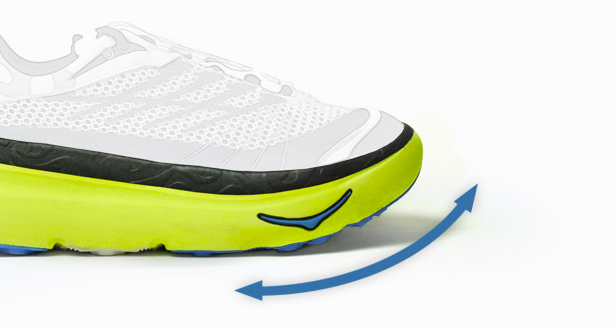
  • A unique addition to the shoe is a ‘rolling’ sole. This helps deliver superior underfoot performance allowing your foot to ‘rock’ forward. Try them downhill…. You will fly! The rocker sole propels you forward.
  • The increased footprint of some 35% bigger than a conventional road shoe offers increased stability. The wider base compensates for the height of the sole making every foot strike a confident one.
  • Throughout the range of Hoka One One shoes, grip changes with each model. The Bondi B road shoe has less grip and traction to allow for speed, the Stinson B (was Combo XT) mixes between the Mafate trail shoe and Bondi B and provides a shoe that works well on either road or trail. The Mafate is designed for severe off road running and the newly modified Mafate 2 has a new upper and increased grip. The new shoe in the Hoka range is the Stinson Evo. This shoe has all the benefits of increased foot platform and cushioning but has been re-worked into a shoe that offers a race fit. It has a breathable upper, speed lacing, increased grip and reduced weight; it is an out and out race shoe!
Statistics:

  • Less Impact – Increase contact with the ground by some 45% and less impact by 20-33%
  • On the flat a reduction of energy consumption by -3 to 5% (oxygen+lactate blood measurement+running mechanical properties)
  • Uphill -8 to 18% decreased energy consumption
  • Downhill -15 to 20% reduced shock impact
  • Conclusion – Better performance for less effort and increased protection

The Shoes:

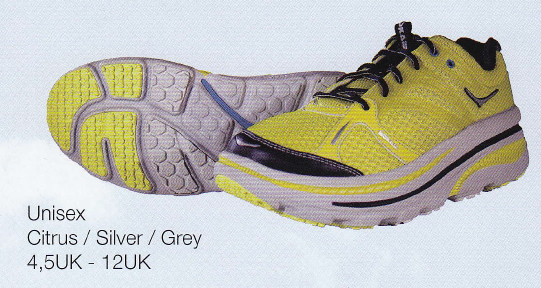
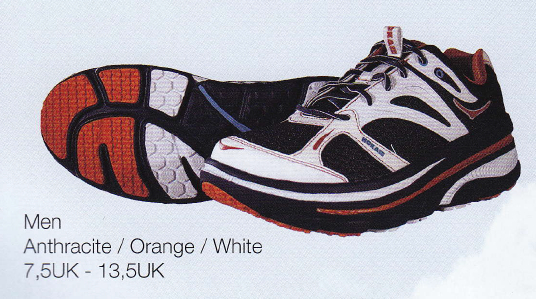
Bondi B – Road shoe

Bondi B by Hoka One One 2012

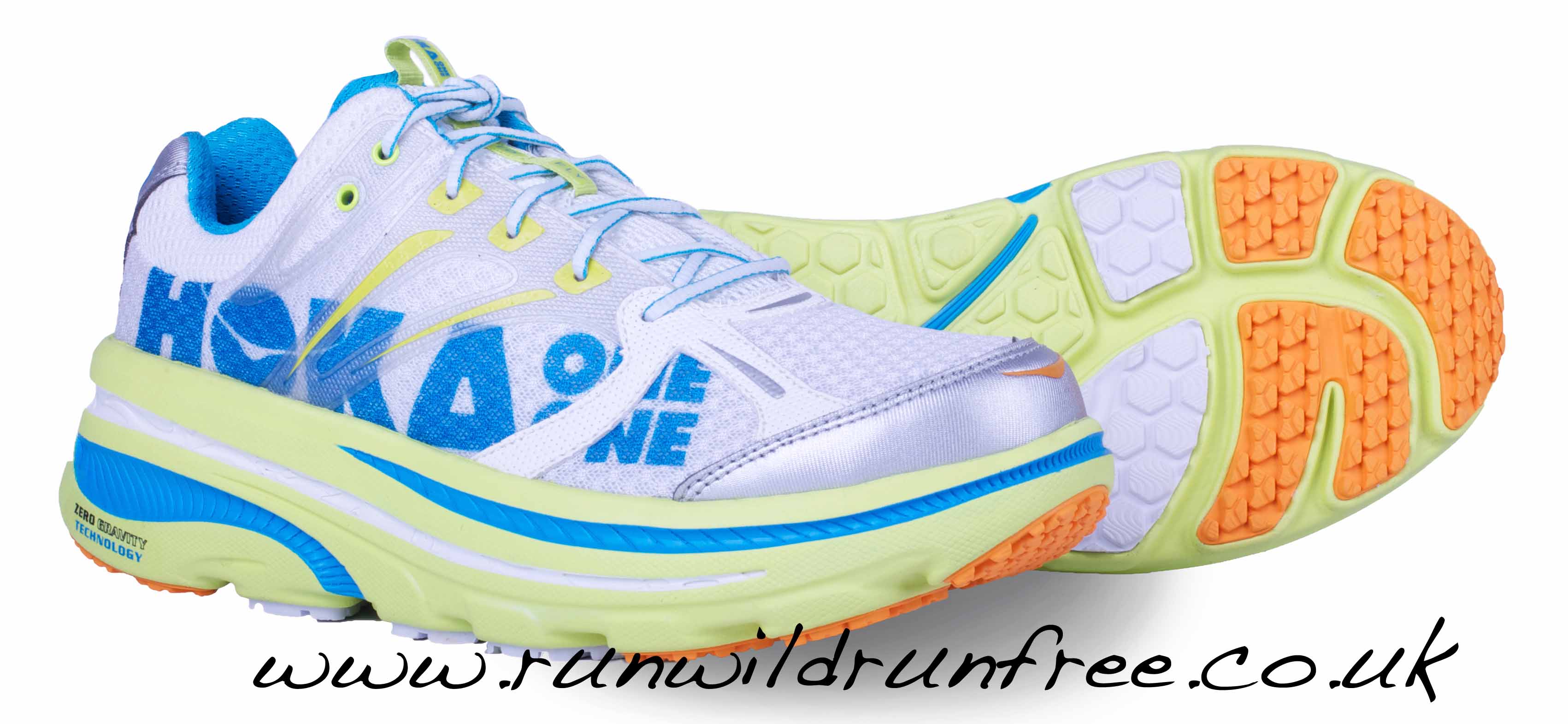
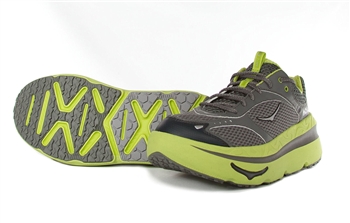
Bondi B is a high performance road shoe suited to marathon runners, triathletes and ultra runners. Bondi B absorbs impact, shocks and reduces fatigue. It has 2x EVA volume and a 50% rocker profile. It has a 20mm recessed bucket situated within the midsole and provides support and control as and when required.

Stinson Evo – Trail

Stinson Evo/ Stinson B Evo by Hoka One One 2012

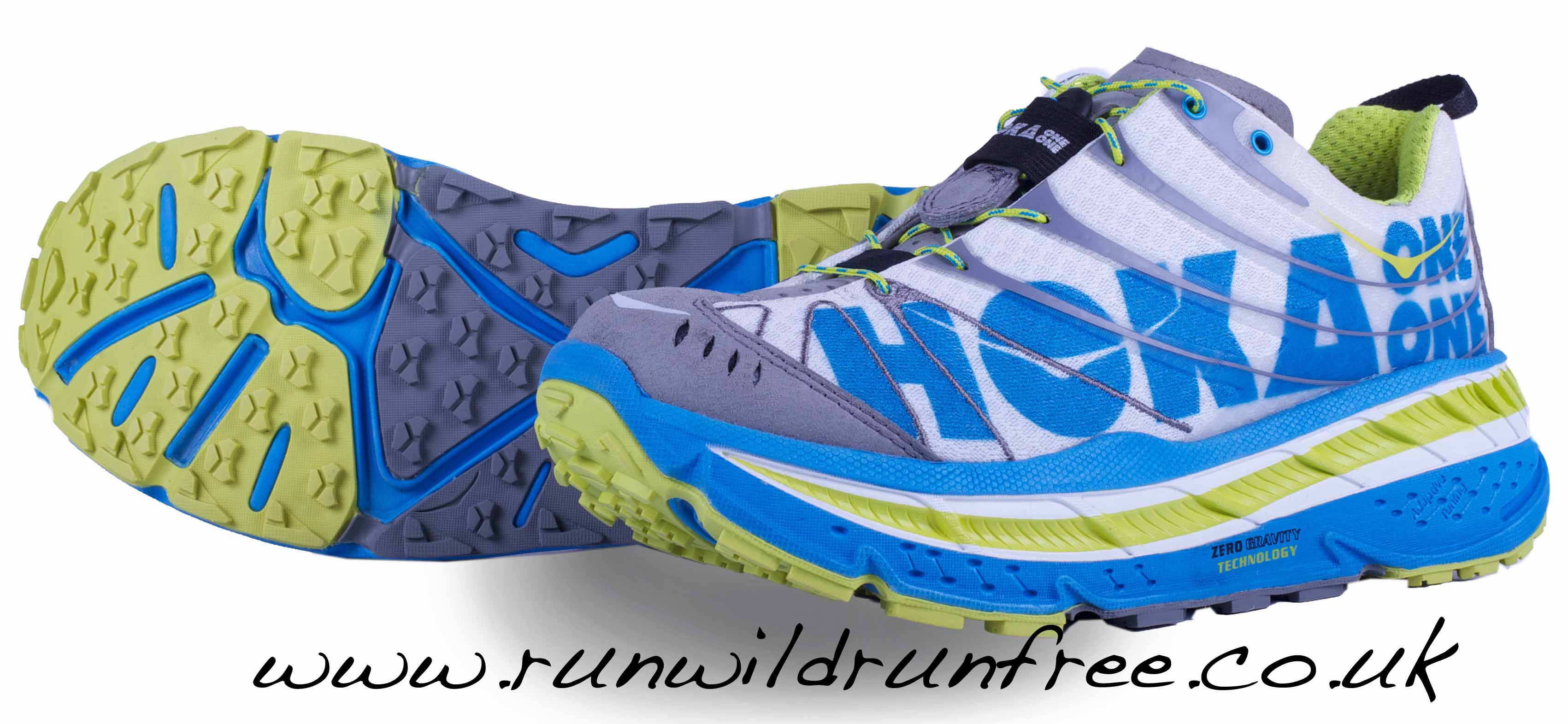
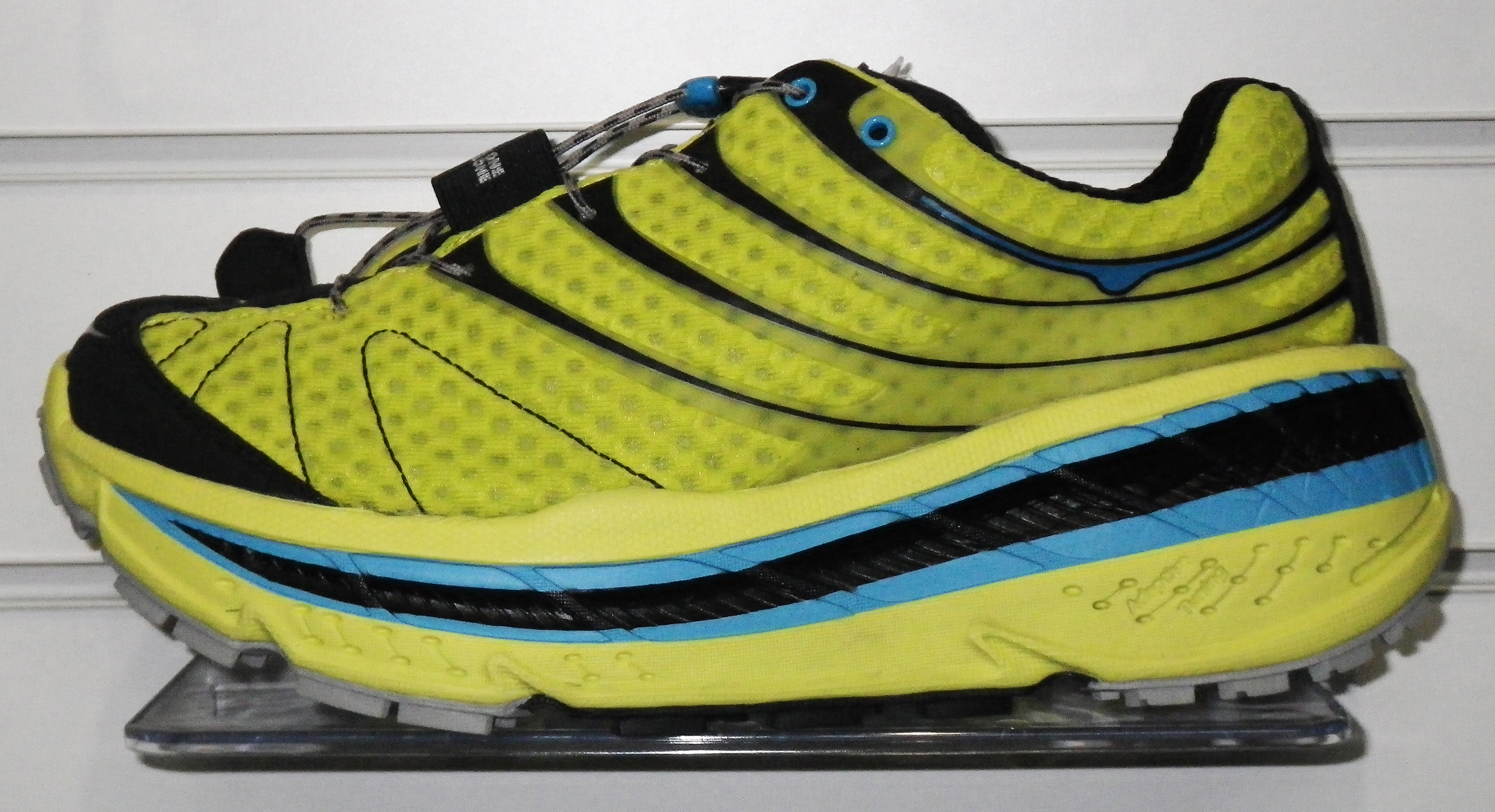
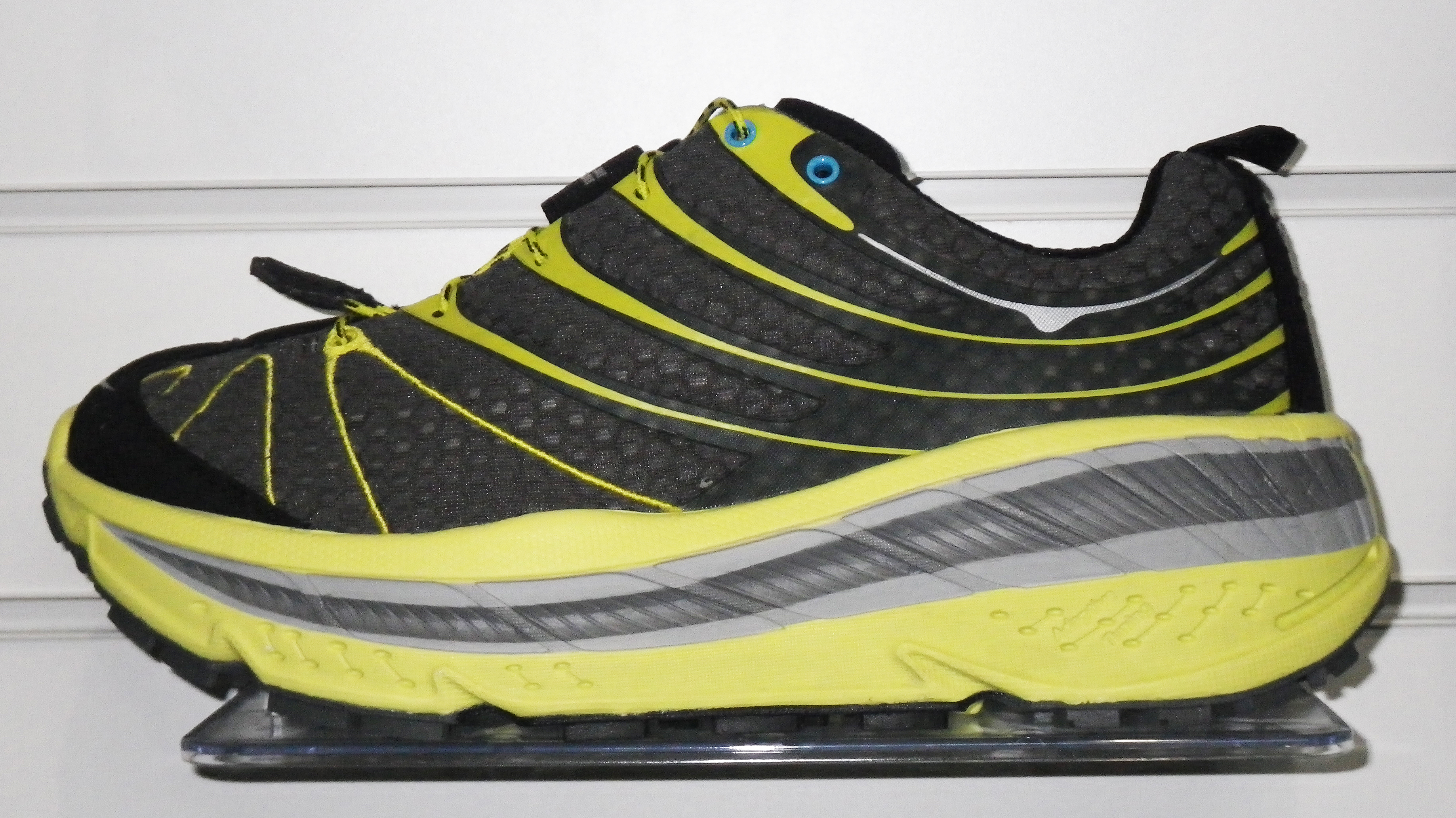
Stinson Evo is designed for absolute racing performance. It is the flagship of the Hoka One One 2012 range. It has a new outsole with EVA lugs to improve on weight. The surface profile has been altered to provide enhanced grip on mud and wet rocks. In addition, this grip provides superior uphill traction. The upper has been optimized to provide a precise racing fit with improved forefoot hold that balances weight and support. It has a quick lace system for rapid adjustment and the new upper has improved breathability. Revisions to the mid sole include a contoured sidewall which help reduce weight and it has a 25mm recessed midsole. The shoe has a 50% rocker profile, 2x2x EVA and recessed foot bucket.

 Mafate 2 – Trail

Mafate 2 by Hoka One One www.runwildrunfree.co.uk

Mafate 2 by Hoka One One


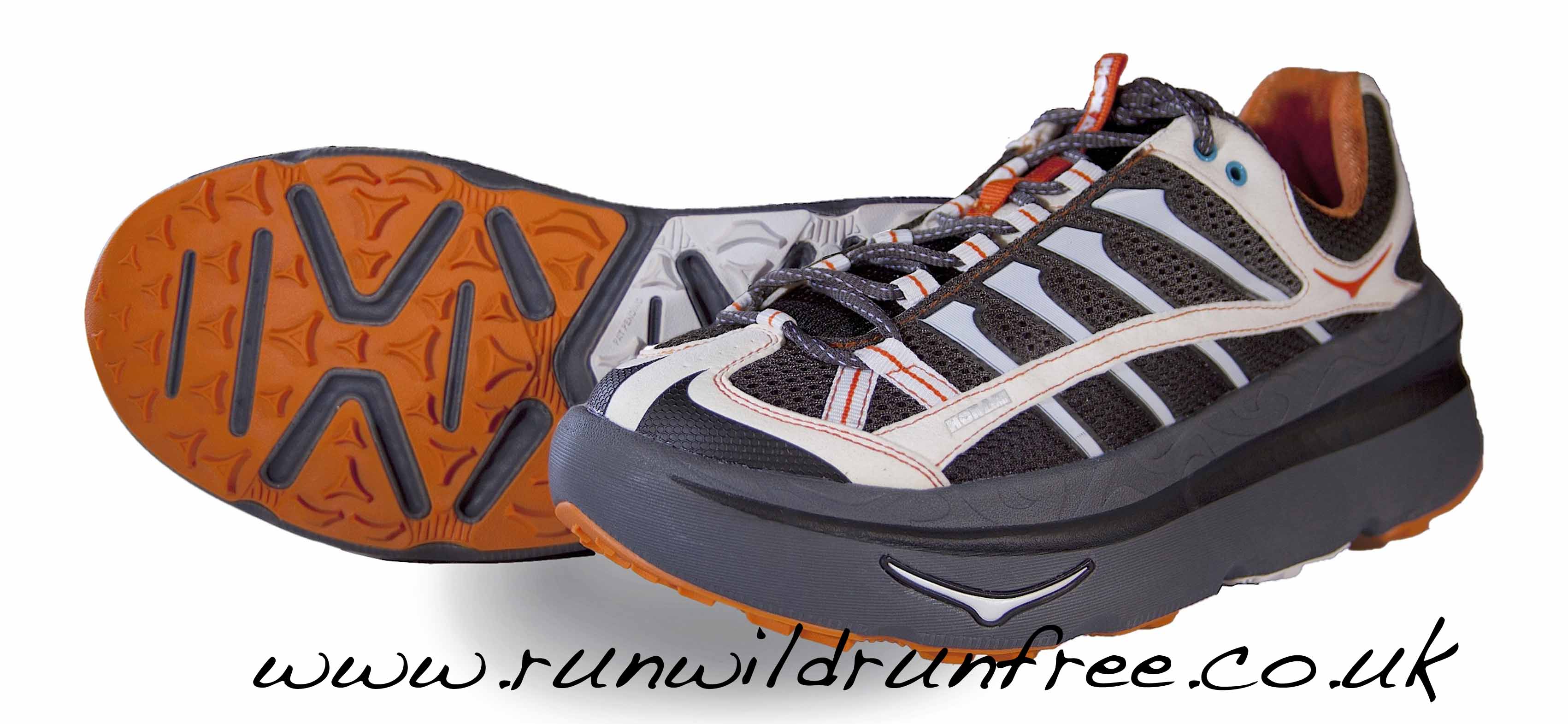
Mafate 2 is designed for tough terrain. It is designed around grip and support. The outsole has been overhauled over previous Mafate models and has a 4.5mm lug profile to offer superior grip. The upper has also been reworked to offer a precision fit and with a 30mm bucket within the midsole this provides a level of hold second to none. Lacing over previous models has also been adapted by adding an additional lacing loop allowing the runner to obtain a tighter fit if required. The shoe has 2.5xEVA and a 50% rocker profile. In addition, the Mafate 2 has a 35% wider foot platform over conventional trail shoes allowing you to ‘run through’ tough terrain.

Stinson B – Road & Trail

Stinson B by Hoka One One

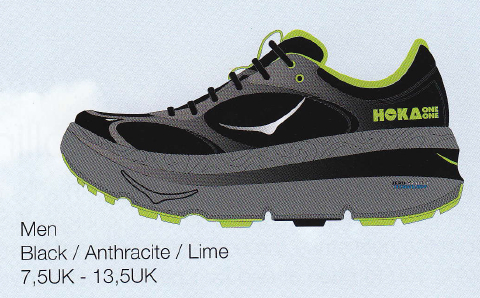
The Stinson B, previously Combo XT (I am awaiting new imagery of the Stinson B, this is a 2011 model) is designed as a go anywhere shoe. It combines aspects of the Bondi B and Mafate. It has a 2.5x EVA and 50% rocker profile and has a tread pattern that is suitable for road and light trail. However, if the trail is hard, dry and rocky, this shoe realty does excel. It has a soft cushioned upper, a wider fit and it reinforces comfort without compromising support or stability. It has a 30mm recessed bucket and offers supreme protection.

In action:

http://www.youtube.com/watch?v=IH91KFK7ABE


Stock & Ordering:

2012 stock is due to arrive March 5th to 12th and is available from www.hokaoneoneuk.co.uk

 Analysis and Use:

Mafate by Hoka One One


First time impressions of the Hoka One One sometimes mean that potential users can’t get beyond the look of the shoe! Yes they are different and Hoka One One does not try to hide the fact. In fact, the contrary, they use strong bold colours that attract your eyes and your initial reaction on seeing them for the first time is ‘what the hell are they?’

Mafate Waterproof by Hoka One One


I had the same reaction. I saw them in a French Trail Race in 2010. A real tough mountainous event and in first place came through this lightweight athlete bouncing along and a pair of brightly coloured shoes. I took a second look…. and then a third and then a fourth look. I laughed to myself. But then I thought about it… hold on, this guy is in first place!

I stored the memory and then I saw them at another race, then I saw four or five pairs. I decided it was time to investigate and purchased a pair! Within 1 week I was sold… I was never going back!

Hoka One One at UTMB 2011

I started with the Bondi B. I purchased them on a Friday. Walked in them all day Saturday and then ran a road marathon on the Sunday. It was liberating! I bounced along with an effortless glide and energy return from a shoe that I hadn’t felt before. As the miles ticked by I noticed considerably less fatigue, a notable reduction in impact and the key factor was that I found that they made me want to mid/ forefoot strike. I would say the only noticeable change I made to my gait and stride was that I took shorter steps and increased my cadence.

Not long after I purchased the Mafate for trail running. Believe me, if you are running on rutted, hard and rocky terrain the Hoka One One are the full suspension mountain bike of the run world. What was obstacles became just glitches that I could run through the terrain without worry… downhill the shoes excelled taking away the harshness of the terrain and allowing a comfort level never experienced when running downhill before. At the end of a race or training, fatigue and ‘doms’ were reduced significantly allowing for faster recuperation and an ability to train at a higher level on repeated days.

Time to Fly - Hoka One One

Observers would look at the shoes and in this barefoot/minimalist market would laugh! However, they missed the point….  Hoka One One only has a 4mm drop from heel to toe making this a real mid to forefoot shoe. A low differential is key for enabling runners to land in a ‘natural’ way. The difference with Hoka One One is the cushioning. All other manufacturers obtain a low differential by reducing cushioning; not Hoka One One. They offer all the benefits of a minimalist approach but with superior cushioning and comfort. It has now been confirmed in many aspects of the natural run movement that Hoka One One are inline with the philosophies of a more natural run style.

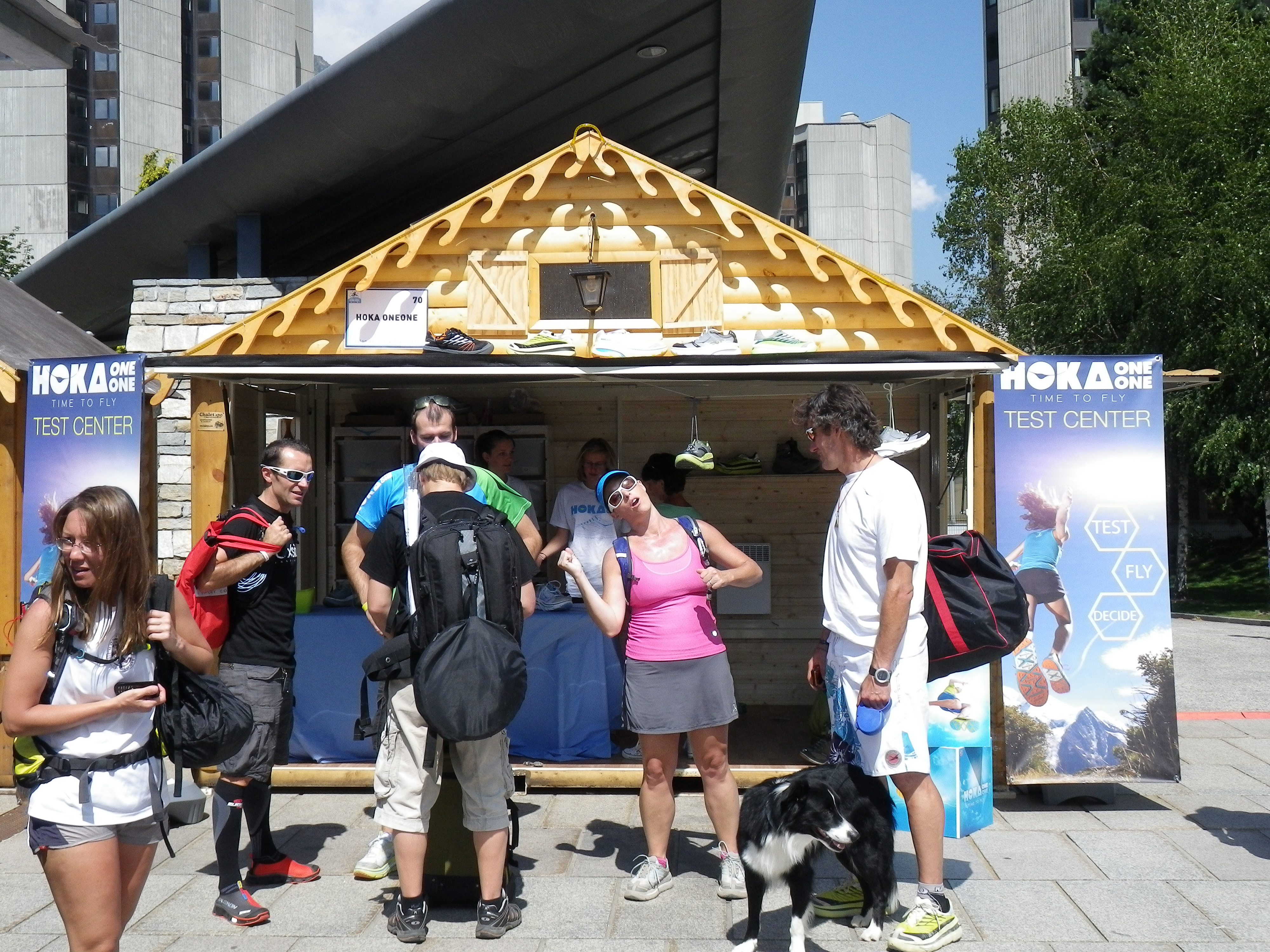
So, back in the UK I wanted to purchase the shoes! Mmmm stumbling block. Due to the uniqueness of the shoe, obtaining and shoes in the UK was extremely limited. So, as the saying goes of ‘putting your money where your mouth is’ I did just that and I started to sell the shoe.

In the final 6 months of 2011 and certainly in early 2012 I have noticed an increased awareness and acceptance of what Hoka One One can offer.

All I can say is, if you don’t like the looks, get over it! Once you put them on and run in them, you won’t mind. They are an experience to behold…

Stinson B by Hoka One One


Hoka One One – 2012

Hoka One One shoes utilize a unique rolling motion to deliver superior underfoot performance. Featuring a 50% rocker profile, Hoka One One help provide an excellent stride transition. It propels you forward with every foot strike.

Hoka One One are the only shoe to utilize oversize technology. Using up to 2.5x the EVA volume in the midsole in comparison to conventional running shoes. Offering outstanding impact absorption they allow you to run natural irrespective of the terrain.

Your foot sits within the sole in a unique patented bucket design which is recessed between 20 to 30 mm into the midsole. This allows for precision striking and optimum stabilisation of the foot. Importantly, this bucket allows for for excellent responsiveness despite the high level of cushioning.

What is also key across the Hoka One One range is that they utilize a wider footprint. In comparison to normal run/ road shoes this platform is 35% wider. This profile works to counter the increased height but also to add confidence and increased grip to every foot strike.

The sole of the shoes are designed to synchronise with your terrain and as such, Hoka One One have developed a series of shoes so that you  have the right shoe for your chosen terrain. The midsole is also designed with grip in mind allowing for the correct amount of deformation so as to provide constant contact with the ground.

The 2012 Range

The Hoka One One shoe range has taken a firm hold in 2011. In 1 year, they have featured in 8 Countries with 17 major victories.

Diana Finkel 2010Hardrock 100 Karl Meltzer Massanutten 100, Pony Express Trail, 2064 miles Dave Mackey 2011 Miwok 100k, 2011 American River, 2011 US Trail Championships, Bandera 100k Christophe Le Saux Sahara Raid 200k, 2011 Australian Outback 540k, 2011 Gutan Trail 200k,, 2011 Guadrun 150k, 2011 Tour des Giants 2nd place….. and so on, the results keep coming!

For 2012, the shoes will undergo some tweaks and minor adjustments based on feedback from runners and as an ongoing development of the shoes and brand. 2011 saw the introduction of the Combo XT (Stinson in the US) and it is this shoe that has been developed into a new shoe for 2012, the Stinson B Evo.

BONDI B

Bondi B is the road shoe in the Hoka One One range and is ideally suited to ultra runners, marathon runners and triathletes who want to push endurance boundaries. Ideal at reducing impact, shocks and lessening fatigue. The Bondi B also works exceptionally well on hard and compact trail. In principal, the shoe remains unchanged for 2012 with one exception. Sizing has beed tweaked and the Bondi B will now ‘fit’ inline with all shoes in the Hoka One One range. I recommend that if you are not already a Hoka One One user you should size up by a 1/2 size from your current run shoe.

Price – £130 plus postage and package

Ordering and colour options:

Pre Orders for 2012 will be accepted on completion of an order form. No payment will be required until stock has been received in the UK. Delivery is expected March 2012.

Colour Options:

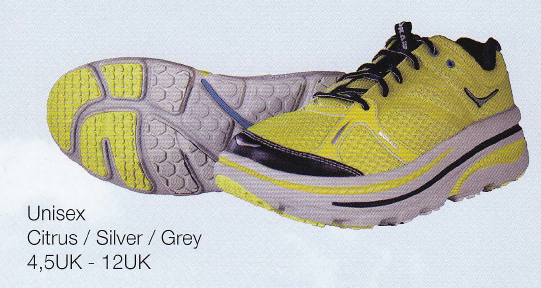
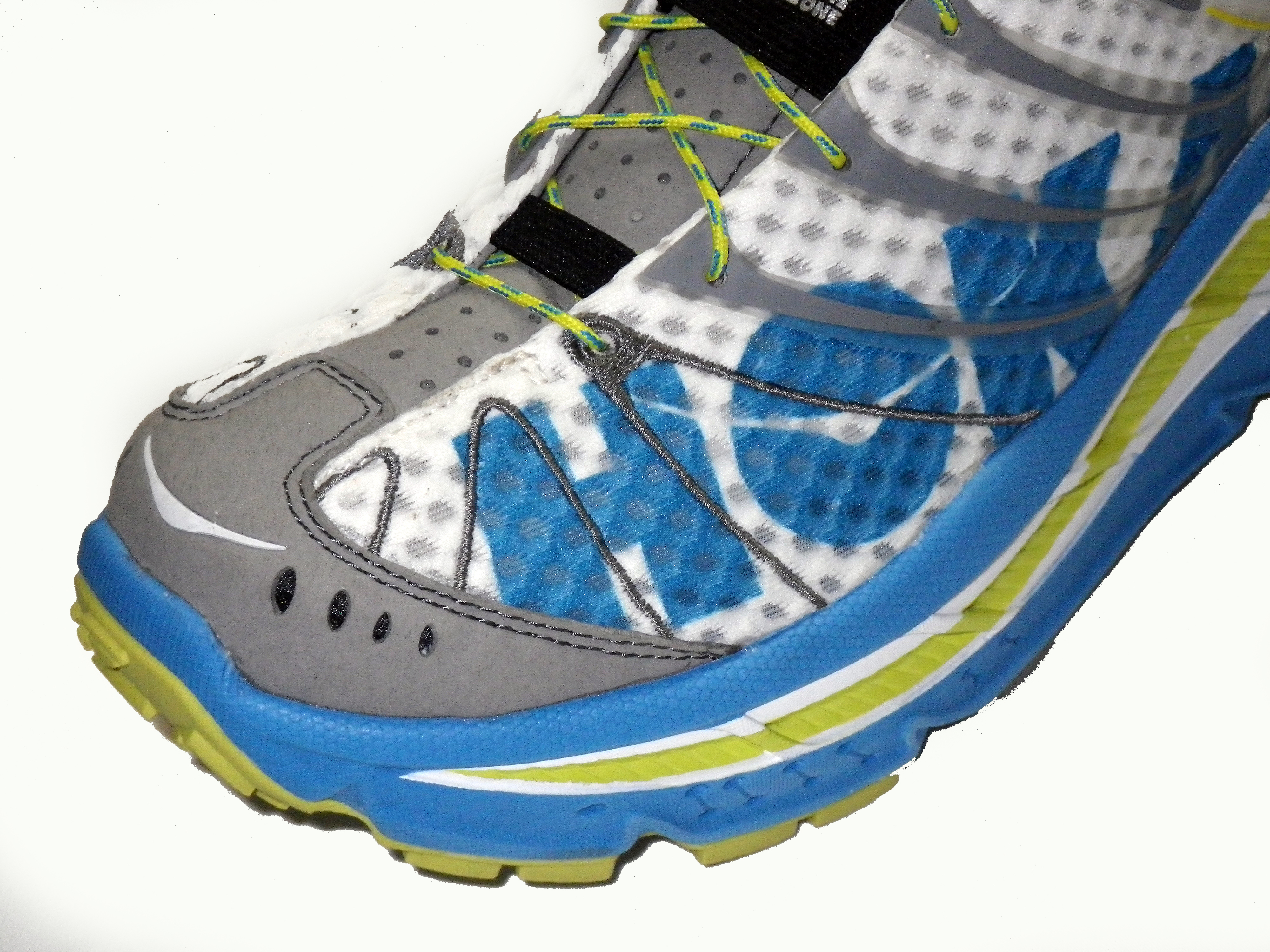
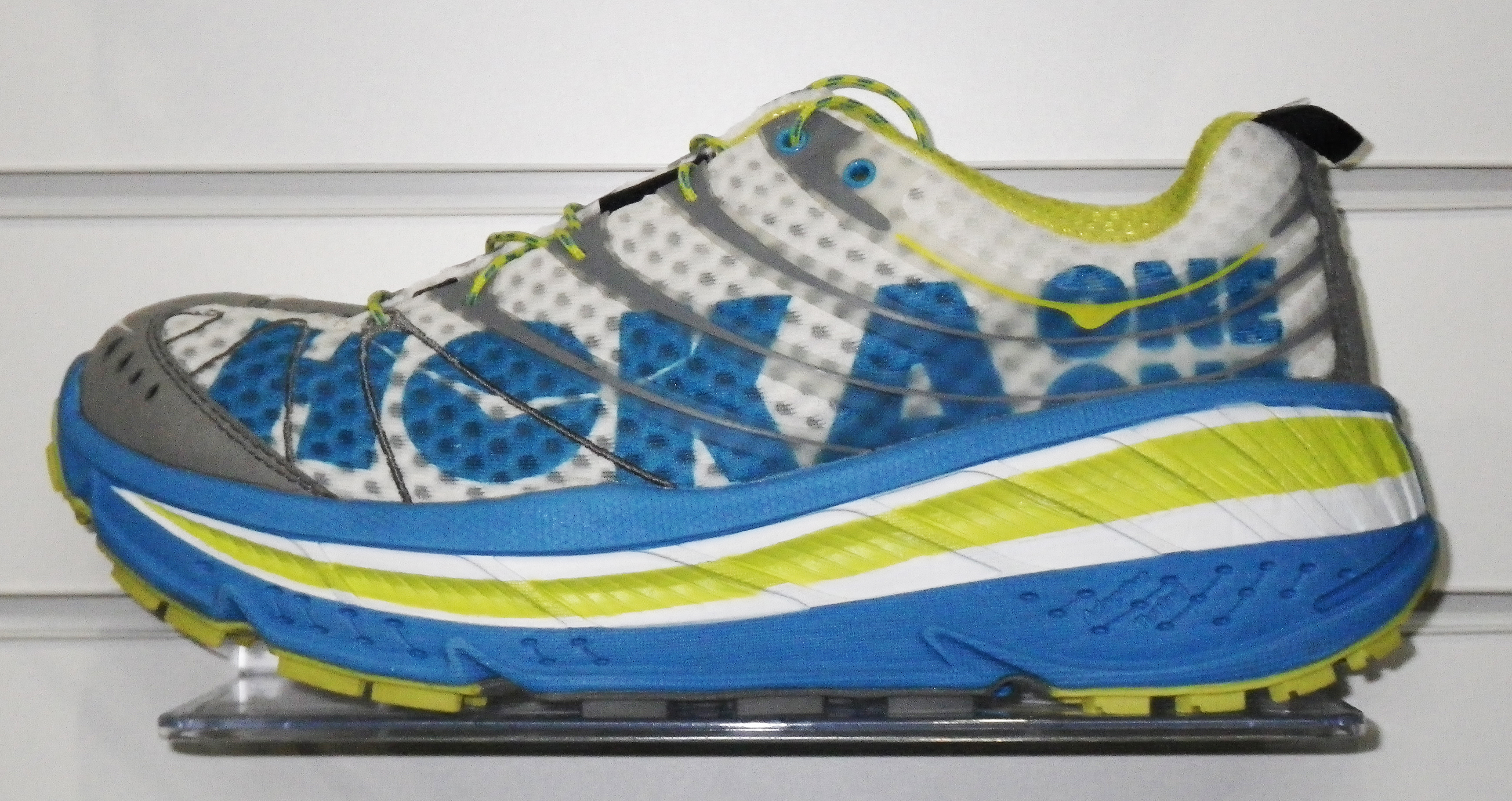
Limited stock and special orders are available for the Unisex white/citrus/cyan ‘branded’ with Hoka One One on the side. This is a statement shoe. I definitely recommend pre ordering of this colour way.The standard unisex shoe for 2012 will be available in sizes 4.5 UK to 12 UK in citrus/silver/greyThe Mens shoe (or unisex if your foot size is larger that 7.5 UK) will be available in 7.5 UK to 13.5 UK in anthracite/orange/white

Bondi B is still available at anytime in 2011 colours and size (please go 1 full size up from your current run shoe if it is not a Hoka One One)

STINSON B

Stinson B is currently named ‘Combo XT’ in the UK and will be renamed for 2012 to fall in line with naming in the rest of Europe and America. The shoe has no changes, other than colour for 2012.

Ideally suited for runners who love to mix road and trail. The Stinson B offers great comfort over mixed terrain, a breathable upper and a tough sole for increased durability and traction. This shoe in 2011 has become a ‘best seller’ for runwildrunfree. Clients have seen the benefits of it’s go anywhere attitude, increased comfort and it’s ability to leave you fresh from repeated running or racing. Sizing will fall in line with all shoes in the Hoka One One range and if you are new to Hoka One One, we recommend a 1/2 size larger than your current road/trail shoe.

Price – £116 plus postage and packaging

Colour Options:

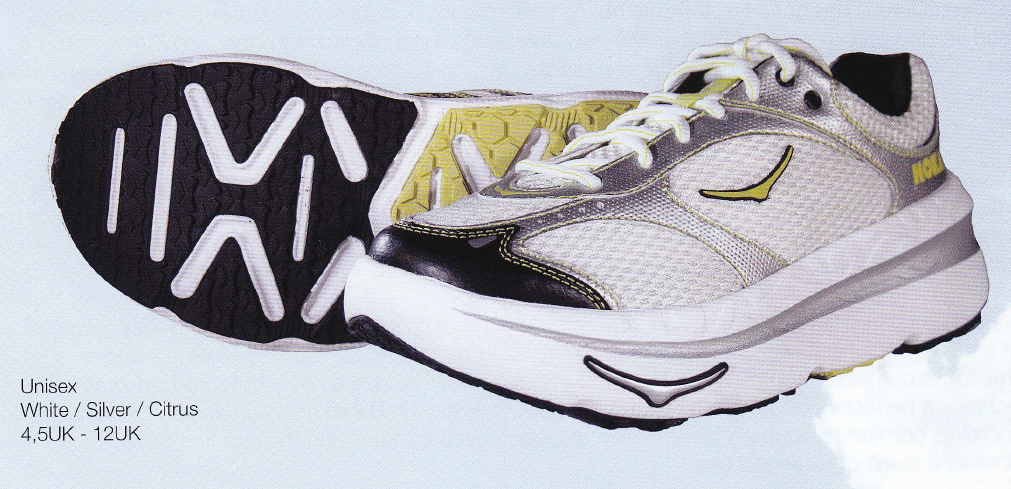
Stinson B will be available in 7.5 UK – 12 UK in blue/silver/orangeA darker colour option and larger shoe size will be available in black/anthracite/lime in sizes 7.5 UK to 13.5 UKIf you require a smaller size from 4.5 Uk, we will be offering the Stinson B in white/silver/citrus as special order only

Ordering is possible by emailing ian@hokaoneoneuk.co.uk and requesting an order form for 2012. The current Combo XT model is still available at the 2011 price of £99.

MAFATE 2

Mafate 2 has been reworked for 2012. Designed for the most demanding off-road running the Mafate 2 has been constructed around grip and support. The outsole has been overhauled to provide a deeper 4.5mm lug profile, it has enhanced grip and increased abrasion resistance.

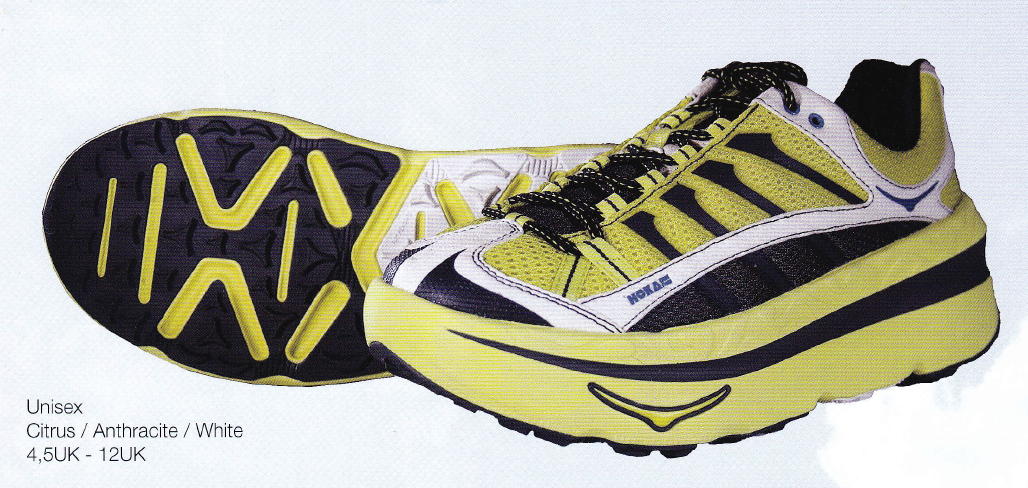
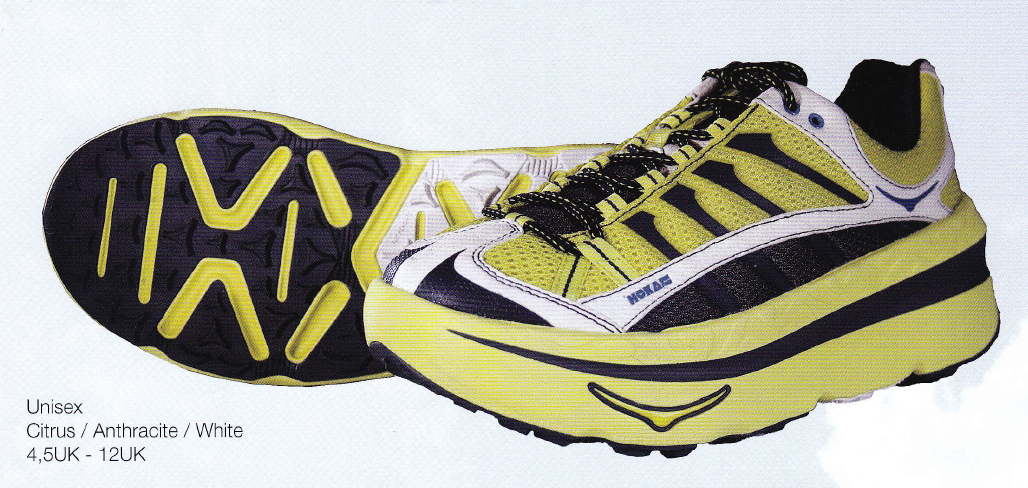
The upper has been re-designed offering high support construction for a precision fit and the lacing system has also been tweaked to help improve fit. The Mafate is how Hoka One One started and is the benchmark from which all Hoka One One shoes have been based. Oversize technology, rocker profile, great comfort, increased foot print and the ability to run on all terrain and maintain a high pace.

Price – £126 plus postage and packaging

Colour Options:

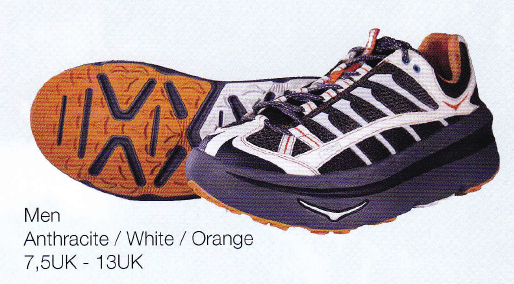
Mafate 2 will be available in citrus/anthracite/white in sizes 4.5 UK to 12 UKA darker colour option with larger sizes will be available as a special order only in anthracite/white/orange in sizes 7.5 UK to 13 UKOrdering is possible by emailing ian@hokaoneoneuk.co.uk and requesting an order form for 2012.

STINSON B EVO

Stinson B Evo is the new addition for 2012. A development from the Stinson B (Combo XT) it is designed for absolute racing performance. A new lightweight and highly breathable upper encloses the foot, holding it firm with a new ‘speed lacing’ system (conventional laces supplied). The outsole has been re-designed offering greater grip on trail. It has high abrasion EVA lugs to improve on weight without sacrificing abrasion resistance. The surface profile has been altered to provide enhanced grip on challenging terrain such as wet rocks, mud and when going uphill. Equally, it transfers from trail to road seamlessly. Stinson B Evo also features an ortholite insole that improves comfort through its breathability, anti-bacterial properties and the fact that it will not compress over time.

Price – £136 plus postage and packaging

Colour Options:

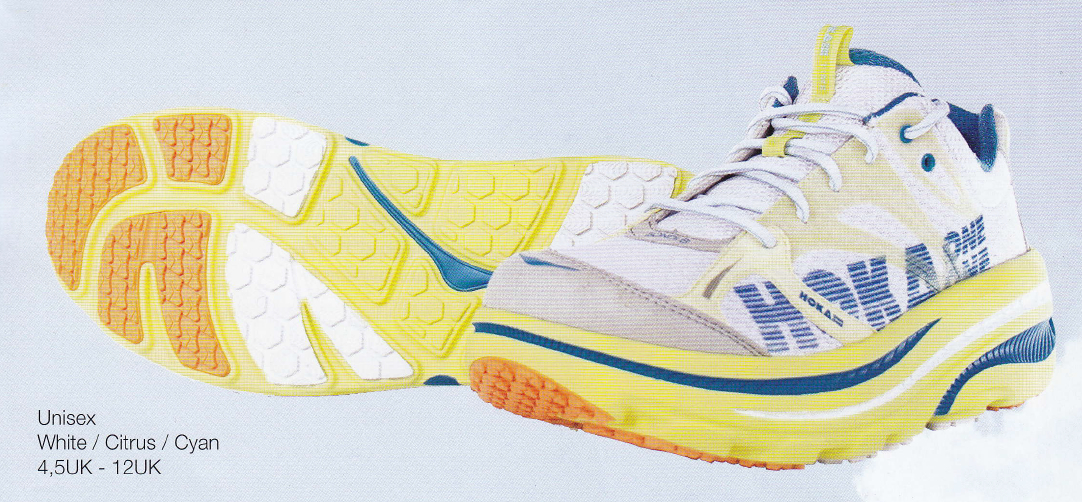
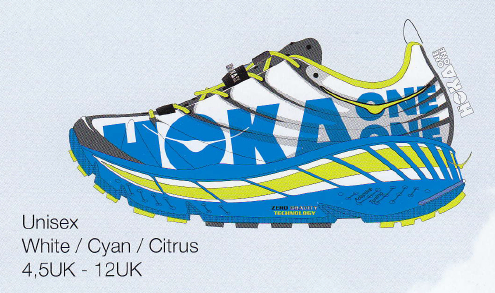
Limited stock and special orders are available for the Unisex white/citrus/cyan ‘branded’ with Hoka One One on the side. This is a statement shoe. I definitely recommend pre ordering of this colour way. Available in 4.5 UK to 12 UK

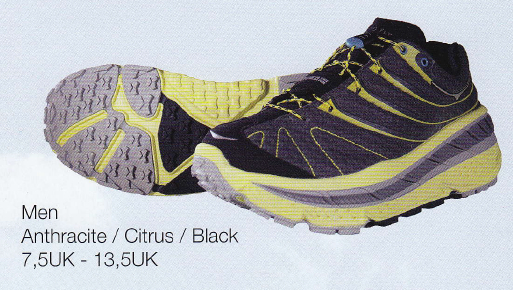
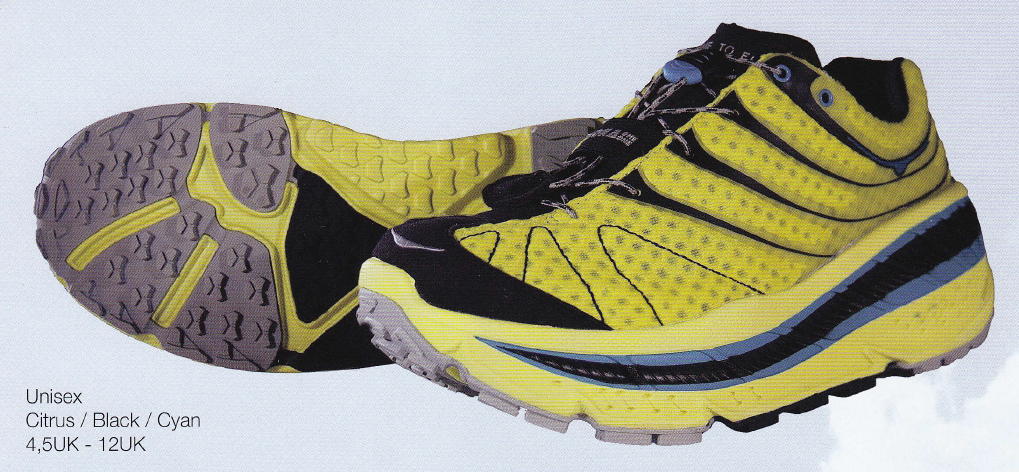
The two main colour ways for 2012 will be the unisex citrus/black/cyan available in 4.5 UK to 12 UKThe Mens shoe will be available in anthracite/citrus/black in sizes 7.5 UK to 13.5 UKA blog post with photographs on the Stinson B Evo is available here: https://iancorless.wordpress.com/2011/09/30/hoka-one-one-stinson-b-evo/

The above review is a little more in depth and the photographs show in detail the benefits of this new shoe.

All 2012 stock will be available from March 2012. I have been informed that 2012 stock will be limited and therefore if you have any special needs or requirements I strongly recommend pre-ordering. No payment will be required until your chosen shoes arrive in the UK and are available for postage. Please email ian@hokaoneoneuk.co.uk for an order form or if you would like any additional information.

Current 2011 stock is still available from http://www.runwildrunfree.co.uk and moving forward, all shoes orders will be taken via this website using PayPal as means of payment.

Hoka One One – STINSON B EVO

Hoka One One is the brainchild of two gravity sports enthusiasts Jean Luc Diard and Nicolas Mermoud. Both men have been adventuring as long as they can remember and their trail running experiences have taken them across the globe. They quickly came to an important conclusion; fatigue, impact and muscle strain were challenges that runners of all stripes had to deal with. So, Jean Luc and Nicolas came up with a brilliant idea, why not design a shoe that would help to alleviate these problems.

This week I was fortunate enough to spend some time with Steve Couper from Sidas and go through the new Hoka One One range for 2012. Needless to say, this was a real bonus. After some discussions with Steve and Nicolas, I was aware that the 2012 range had some significant changes and importantly, a new shoe.

First thinks first, the new shoe!

STINSON B EVO

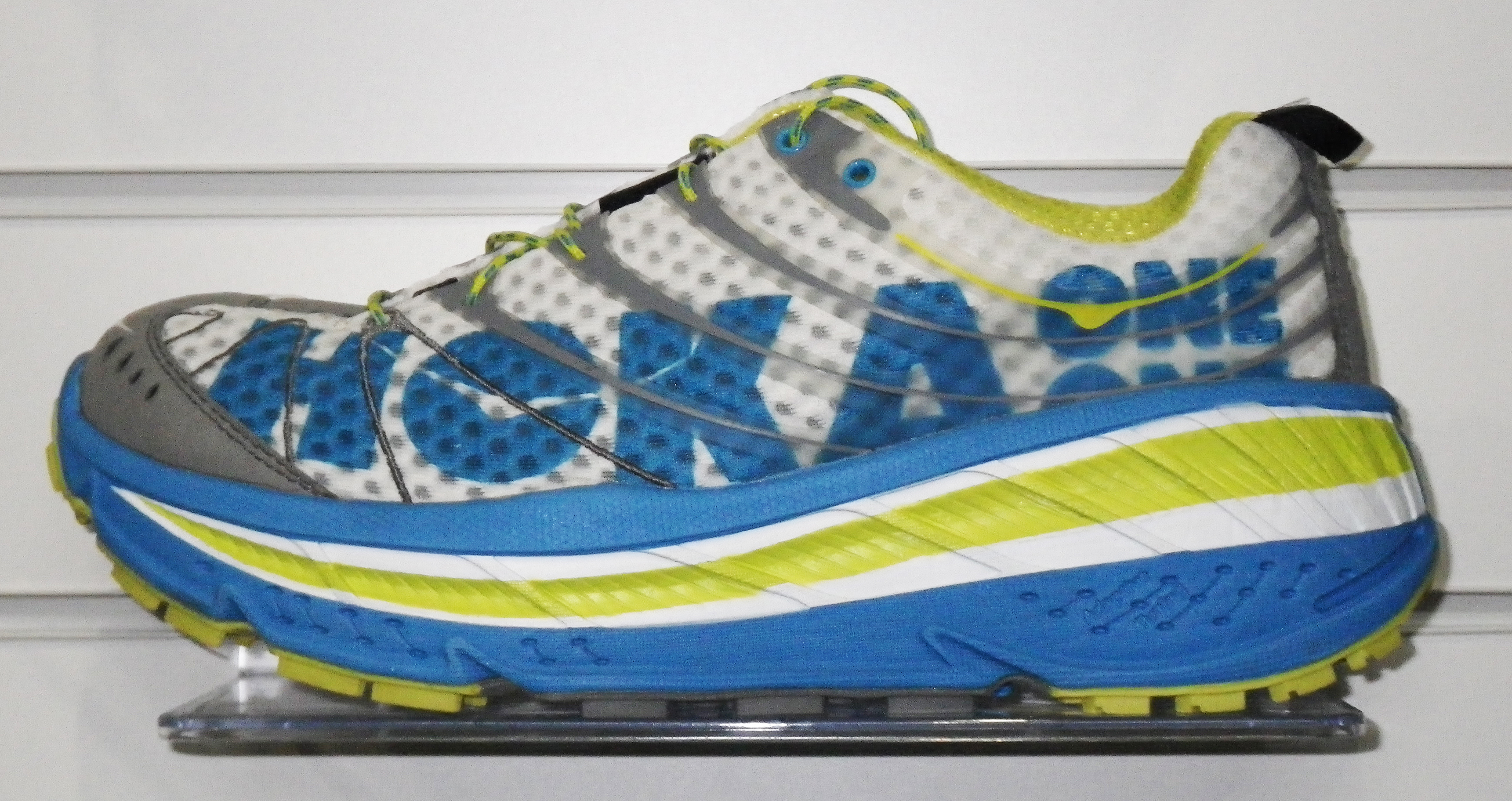
Wow – first impressions are stunning. Steve had all the colour ways on display of this new show but your eyes to go straight to the Unisex show with the bright and bold Hoka One One written on the side of the shoe. The white/Cyan/Citrus colours stand out and just draw attention.

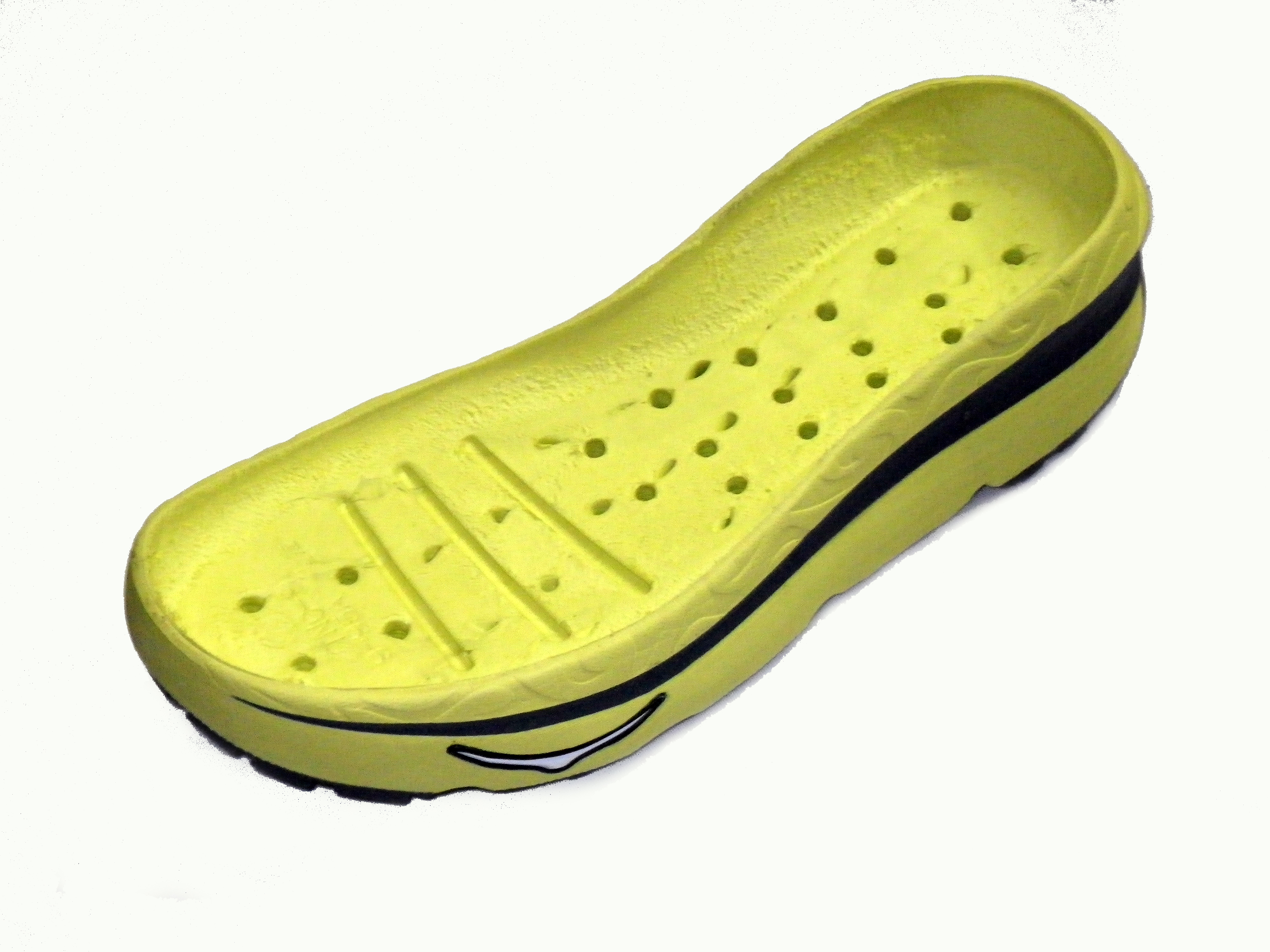
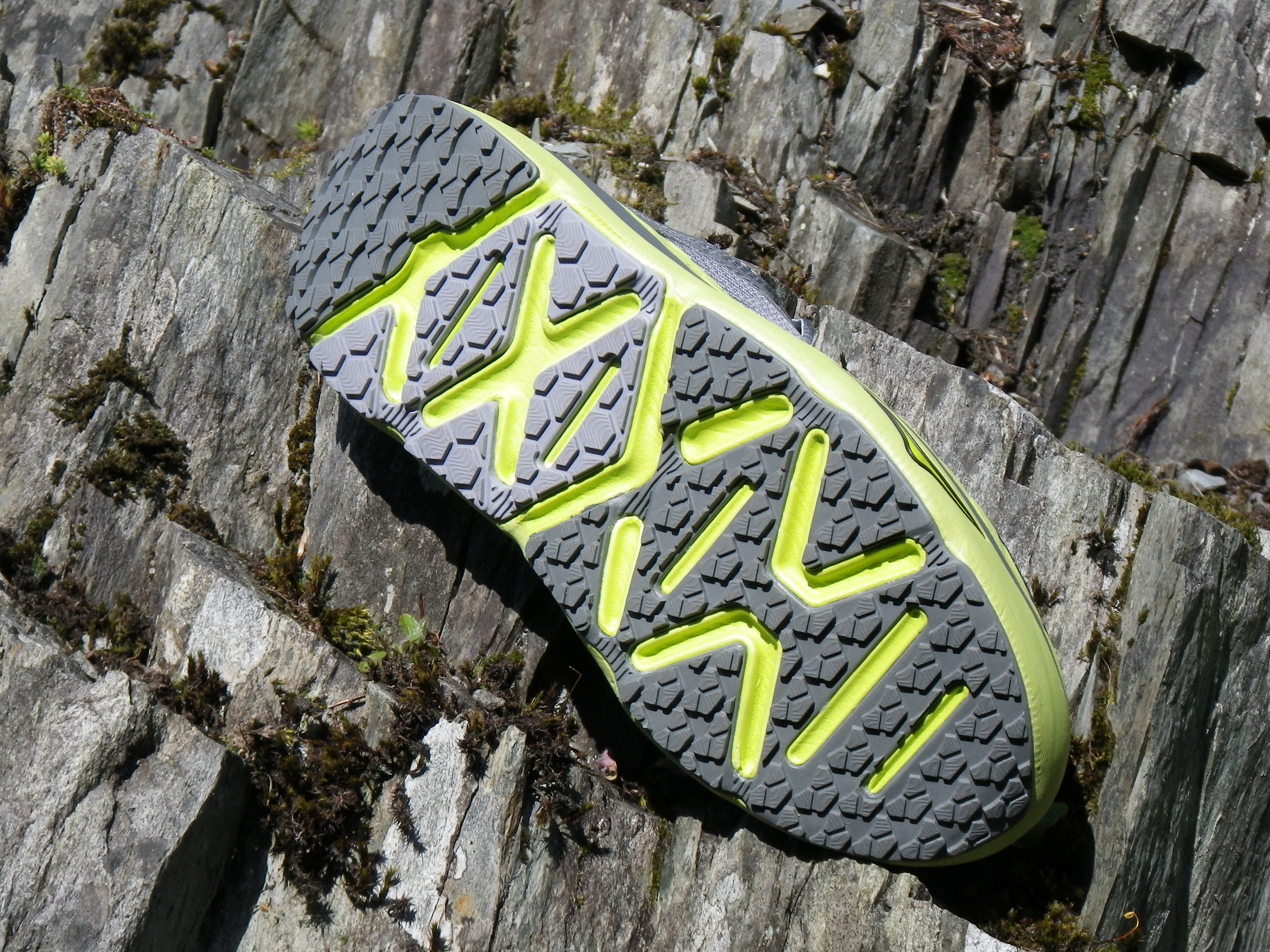
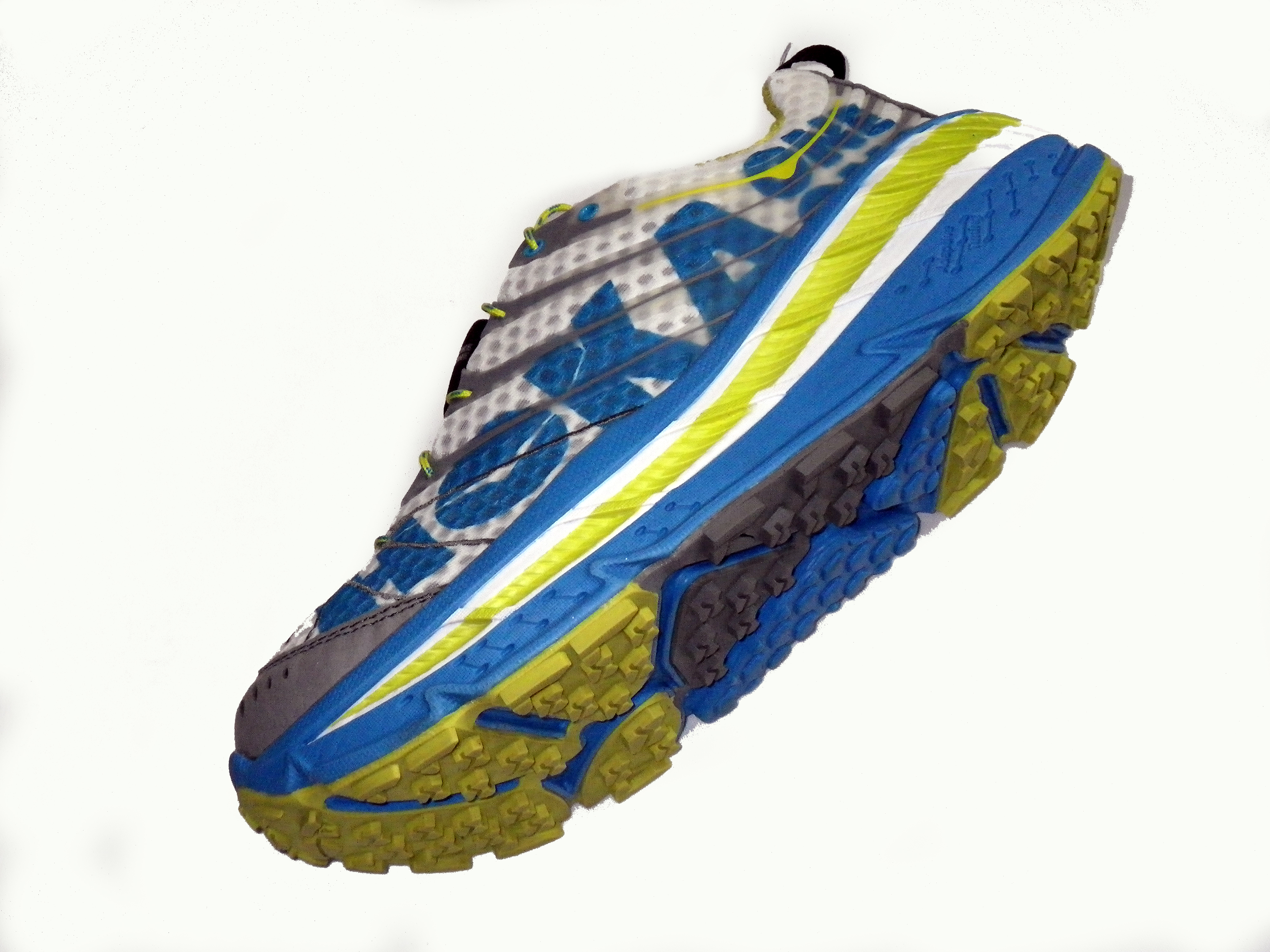
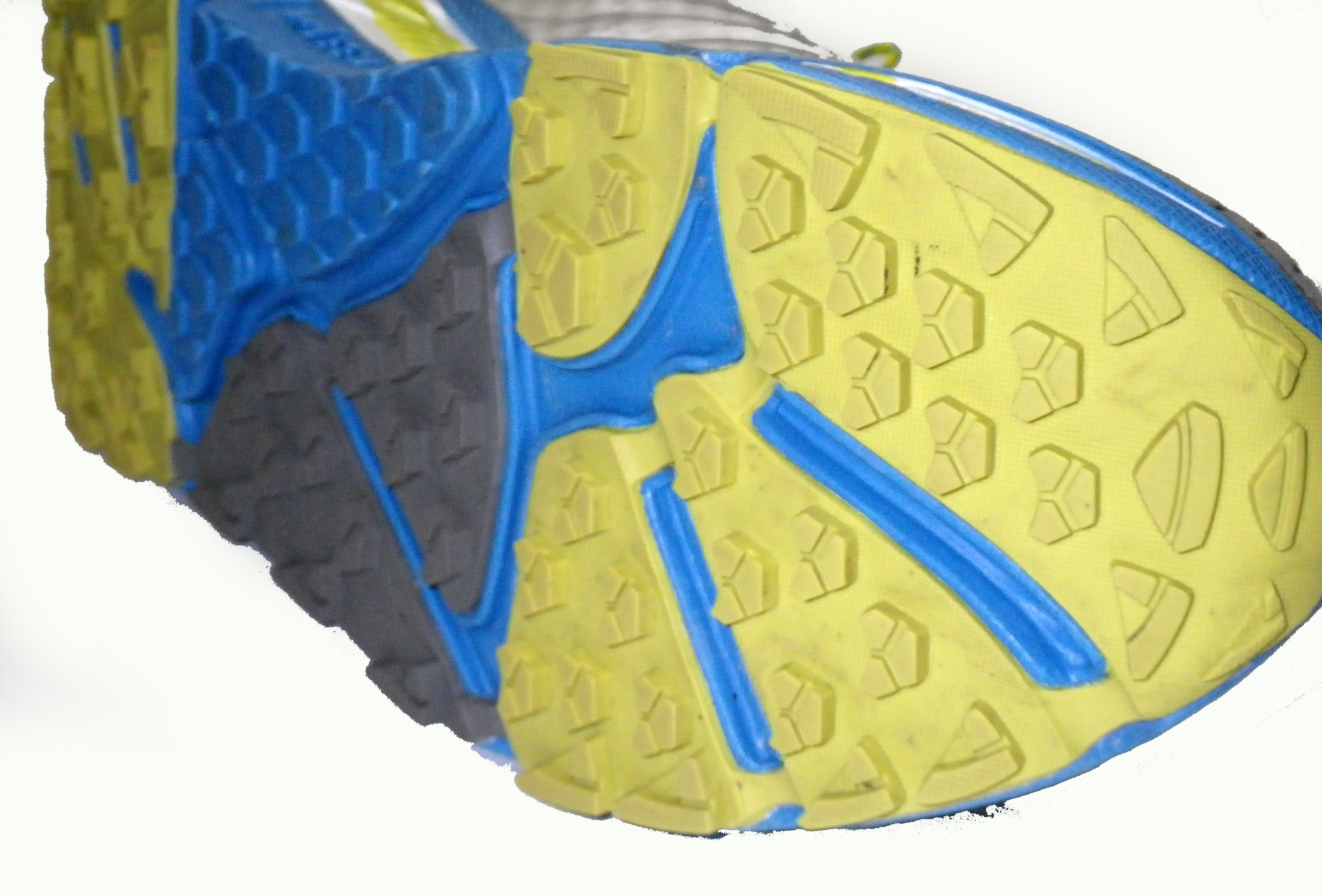
The Stinson B Evo is designed for racing performance and as such is designed around precision and flexibility. The new outsole design includes high abrasion EVA lugs to improve on weight without sacrificing abrasion resistance. The surface profile, as a whole, has been altered to provide enhanced grip (in comparison to the Combo XT/Stinson) on challenging terrain such as wet rocks and mud as well as providing greater uphill traction.

Stinson B Evo sole

The upper has been optimised to provide a precise racing fit and this shoe feels much more streamlined with improved forefoot hold. The upper is also considerably more breathable, it balances all aspects of weight, support and breathability perfectly. There is a pull-cord quick lace system for rapid adjustment (conventional laces also supplied). The midsole which includes a new contoured sidewall synchronises perfectly with the 25mm recessed misdsole. Finally, the Stinson B Evo includes and ortholite insole which improves comfort through its breathability, anti bacterial properties and the fact it will not compress over extended use.

Technology

The Stinson B Evo provides off road racing performance thanks to an enhanced sole and ‘rocker’ profile. The rocker profile creates a smooth energy efficient stride transition. As with all shoes in the Hoka One One range, the Stinson B Evo uses oversize technology with 2.2x the EVA volume of conventional run shoes. This ensures high impact resistance, a smooth underfoot feel and importantly, this enhanced sole allows you to run over mixed terrain in much more comfort allowing you to keep the pressure on and the pace up. Your foot actually sits ‘within’ the sole in a ‘bucket’, this allows for an unparalleled level of  control. In addition, the new grooves in the sole allow for enhanced flexibility.

Colour Options & Stock

The two main colour ways that runwildrunfree will stock for 2012 will be Citrus/Black/Cyan and Anthracite/Citrus/Black.

Citrus/Black/Cyan - Unisex

Anthracite/Citrus/Black - 7.5UK to 13.5UK

In addition to the above, I will have available for PRE ORDER ONLY the limited edition White/Cyan/Citrus with the ‘Hoka One One’ branding on the side. This is a real ‘statement’ shoe and as such will be the shoe to be seen in come 2012.

White/Cyan/Citrus 4.5Uk - 12UK

Sizing? If you currently use either Mafate or the Combo XT in the UK we recommend that you order the same size. If you are currently using the Bondi B, we recommend a 1/2 size smaller. If you are new to Hoka One One, we recommed that you size up by a 1/2 size.

Ordering? I will take pre orders on all shoes and colour ways with an expected delivery in March 2012. I not require advance payment until the shoes arrive in the UK, however, I will require you to complete an order form with a £25 deposit.

Contact? Please email me at ian@hokaoneoneuk.co.uk

Stock? UK stock of all Hoka One One shoes in the first six months of 2012 will be limited. I therefore strongly advise you to avoid disappointment by acting in advance.

Price? £136 plus recorded postage (please remember that Hoka One One shoes last considerably longer than conventional run shoes, 6-800 miles)

Elsecar Skelter, August 13th 2011

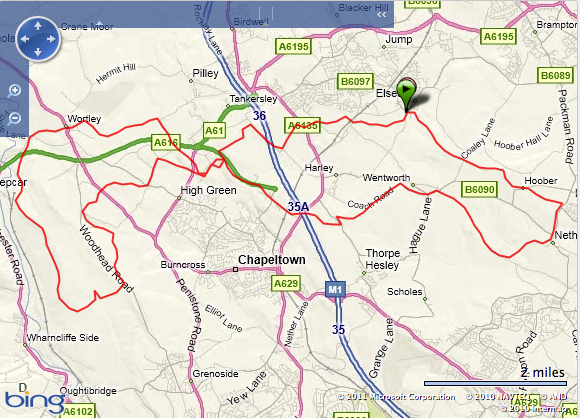
Niandi returned from her weekend in Paris and congratulated me on what turned out to be a joint 2nd place at the Dovedale Dipper in Derbyshire. It soon became apparent that as I talked about the event; the course, the low key nature, the organization, the feed stations and basically what a great event it was, Niandi wanted the buzz too! So, armed with the LDWA book I found the Elsecar Skelter – a 27 mile challenge over a trail route in Yorkshires finest countryside.

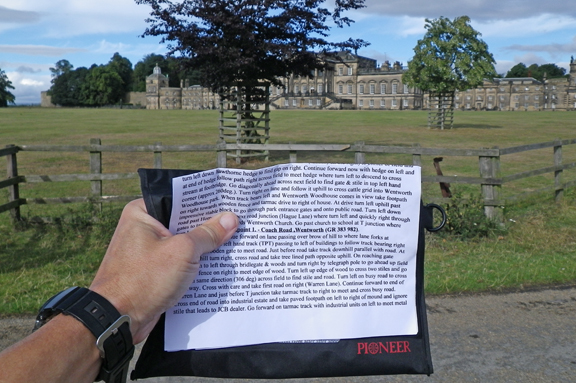
The event had a start of 08:30 but the we where only about an hours drive away so our typical 06:00 start was no hassle. The HQ was in the center of Elsecar, The Market Hotel which was just next to the Heritage Center. As with all these events it was very low key. Plenty of friendly faces and everyone willing to help. We picked up our packs and the ‘route book’. Wow, the route book… it was like War & Peace. Niandi looked at it and felt instantly ill.

“When you said navigation, I thought you meant just following signs” exclaimed Niandi “well, you are going to have to run with me as I can’t run and follow that!”

I wasn’t worried. I was looking forward to today being an opportunity for Niandi and myself to run together and also for me it was more miles in the legs. I was happy for those miles to be easier than the previous weeks marathon at Dovedale. On the start line serious looking runners looked each other up and down. Yorkshire breeds a tough, hardy runner and we were surrounded by them! At the ‘off’ two lads sped away looking as though they meant business… within 50yds they missed the first right turn. It was going to be a long day I thought. As I made the turn with the two other guys ahead going straight on, I questioned if it was myself that was wrong? Never good when you still have 27 miles to go. However, reassuringly I was correct. Importantly, you must always do your own navigation. Make your own mistakes and don’t second guess the decisions.

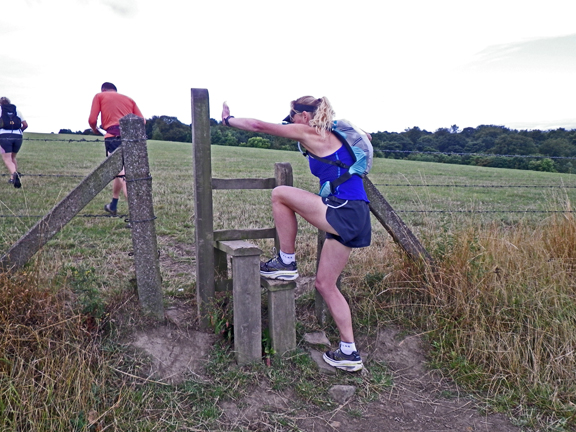
Early pace was relatively sedate as we ran up narrow single track, climbed over a stile and then ran through some open fields.

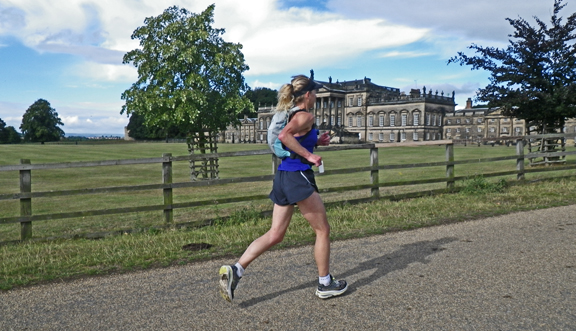
We soon had a small road section, past Cottages, over another stile, through a field and then entering a wood. It was very easy to go wrong but the route book was very well written. It was clear, informative and descriptive. The only issue is when you are trying to move at spped it is difficult to run, read and navigate without missing something. We passed ‘Hoober Stand’ – a 30m high building on a ridge situated in the village of Wentworth. The building designed by Henry Flitcroft was built to commemorate the 1745 quashing of the Jaccobite rebellion (http://en.wikipedia.org/wiki/Hoober_Stand). So, now you know…. it made a nice backdrop for Niandi as she ran past.

Running through Hoober Village Niandi and myself were pretty much running on our own. In the distance we could see one runner. Ahead of him just 2 or 3 others. Running up we came to the brow of a hill and the village of Nether Haugh. Navigation here became a little more complicated…. ‘bear right on tarmac track and take path left of house number 19, go forward (hidden mausoleum on right) on path to corner of field and turn left keeping hedge on right’

As you can see, very descriptive instructions and in most cases very reassuring. Any mistakes could soon be corrected relatively quickly. However, even though I ‘thumbed’ the route it was easy to jump a sentence and then I would find I was ahead of myself and starting to question if I was right. It all comes down to practice, the more you do the better you get. Wentworth Woodouse was in view, a stunning grade 1 listed country house (http://en.wikipedia.org/wiki/Wentworth_Woodhouse)

The first check point came. We had our cards clipped, drank juice, picked up a snack and then we were off. After a section of trail and fields we entered an industrial estate and stupidly I followed the direction of one lone runner in front. After 3-400m I realized we were wrong. As we back tracked I saw one runner turn where we should have turned. Back on the trail we were running uphill when suddenly a group of 4 caught us and ran past…. despite this being training I always find this difficult. I am far too competitive! But I behaved. Needless to say Niandi would not have been too happy to see me get the bit between my teeth and head up the trail…. At the top of this section a group of approximately 6 of us looked at each other; we were all wrong. We had missed a path off to the left lower down. A ‘local’ guy who obviously knew his way around went off piste and we followed, over the brow and running through a field and checkpoint 2 was in front of us. Another banquet. This checkpoint would be visited again much later in the day when we ran our figure of 8 loop.

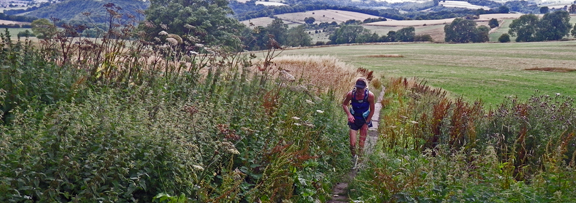
This next section between checkpoint 2 and 3 was the toughest of the route. It had plenty of open rutted fields, gnarly ground, corn fields and thick overgrown vegitation. Believe me, both our legs have the scars to prove how tough this bit was. Navigation was also a little difficult but we managed (just about). We also had a ‘self check’ checkpoint on this route just to ensure no cheating took place. Liked that idea! The course really was a surprise. It was beautiful, tough and the weather was kind. What more could you want. After approximately 13 miles covered checkpoint 3 came and with it the option to take the shorter 20 mile route or commit and go for the 27 mile option. I could see some hesitation in Niandi and when we were asked “20 or 27?” the very quick response from myself came “27”. Pretty sure Niandi thanked me for that decision later in the day….

As we left I immediately went the wrong way. Apparently we needed a ‘supplement’ to the road book for the 27 route. Luckily I had this! Somewhere… !?! Back on track we headed off with the riniging voice of one of the marshalls saying

“This bits tricky…. easy to get lost… complicated… watch out at Dragons Den….”

OMG – Dragons Den… what are we running into? We ran down a path, through a stone yard, over a stile, ran across a field and then ran up a grass bank to meet the road and a left turn. Down the road I looked for a bungalow which apparently our ‘path’ was opposite. Mmmmm apparently not! Aaagh – that bungalow – you mean the bungalow that doesn’t look like a bungalow… ok.

Now in moorland we headed towards the sklyline and a power pylon. The path stopped, a stile was in front of us but the route book didn’t say ‘go over’ the stile. Another runner came. He was local and very well experienced on the course… he had ‘given us the nod’ once or twice before! We chatted and tried to decide on the route. I took the stile and ran on whatt was a definite path. After 5 mins or so it just didn’t feel right. I retraced and did what is always the best thing to do in these situations, go back to the last place you know is correct and then re navigate.

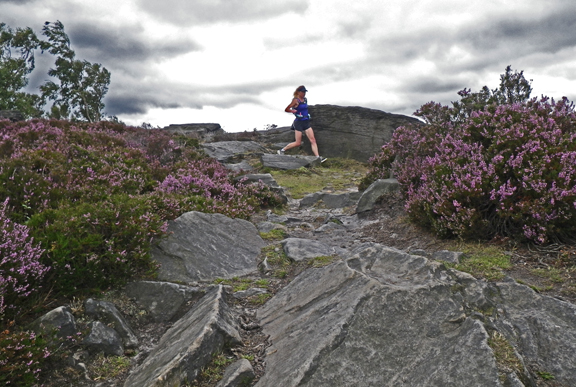
I was back on the track and then we had a ‘self check’ point at Dragons Den. All made sense now…. those marshals new that this area was open to going wrong. Wharncliffe Crags – wow!!! This section of rough tough trail was absolutely fantastic, Tough underfoot, great views and stunning.

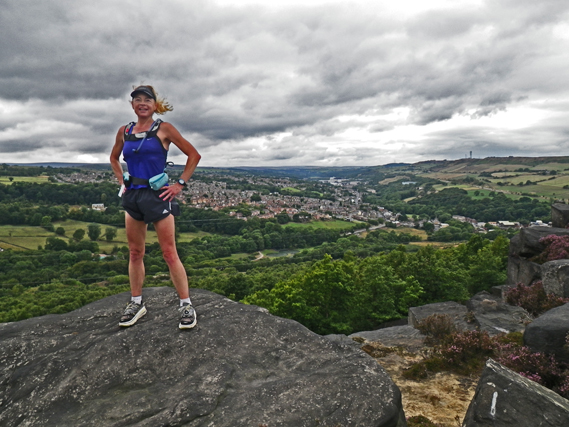
The edge which is characterised as a steep rock face for much of its four kilometre length runs from just east of the village of Deepcar in a roughly south easterly direction to just east of Wharncliffe Side. Wharncliffe Crags stand on the eastern side of the upper River Don valley at a height of around 250 metres above sea level with the highest spot height being 297 metres.

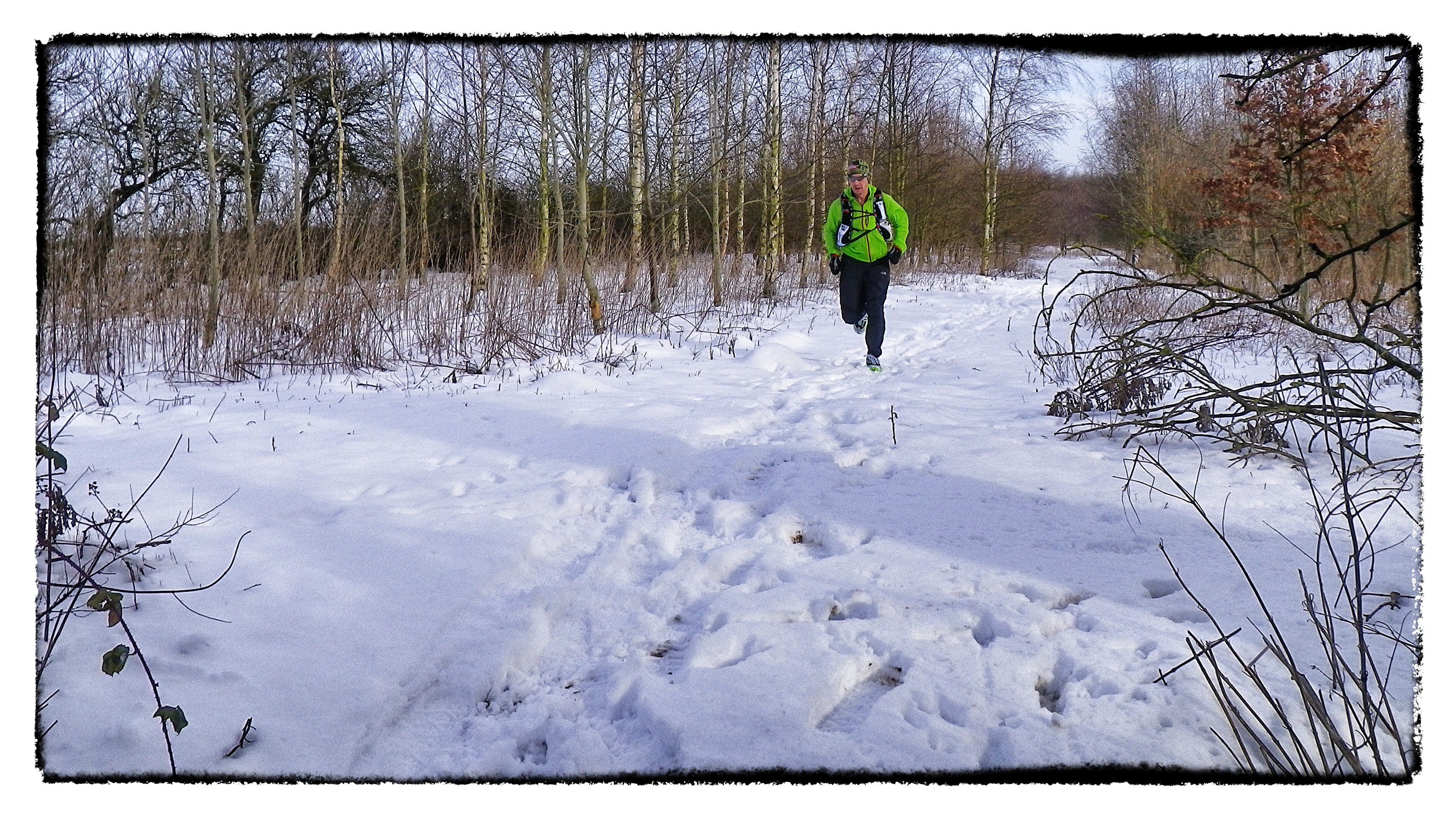
Here is a little clip of me running at full speed on my way down to the edge of the Crags. Needless to say my Hoke One One Combo XT helping to remove all the harshness out of the terrain.

After a short section of forest we now re joined the original route book and our ‘detour’ to build the mileage for the 27 mile option was over. Running uphill we arrived at Wortley Church.

Passing trough a metal gate, we turned right, crossed the road and entered the grounds for Wortley Hall (http://www.wortleyhall.org.uk/) The hall is a stunning location, a beautiful building set in beautiful grounds. Waiting for us here was the ‘famous’ checkpoint 4.

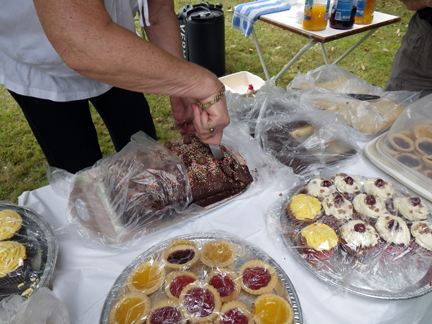
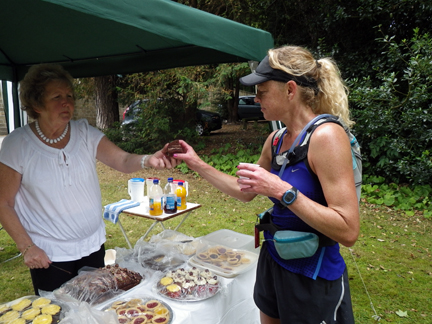
All the feed stations in this race were superb but ‘4’ was the icing on the cake! The walkers would certainly be able to benefit from the spread on offer… i grabbed a jam tart, or was it two? Niandi was her usual restrained self, body is a temple and all that and took a whopping piece of chocolate cake!!!

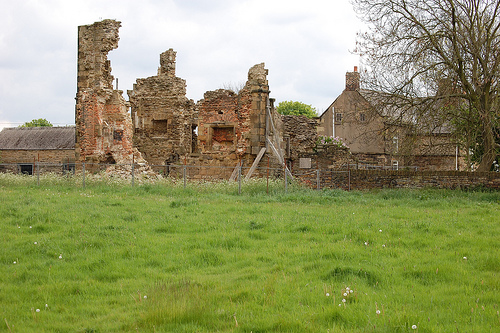
It was the home run now and feeling refreshed from the joys of checkpoint 4 we pushed on. We now began to retrace some of the route from the earlier part of the day. Fields, gates, paths and routes had a familiarity. It was reassuring. However nothing looks the same when running in the opposite direction. From here on navigation was relatively easy. I had taken on the tactic of running ahead, stopping, naviagting, waiting for Niandi and then pushing on. We ‘self clipped’ at checkpoint 4a and then had a really great section of forest before suddenly arriving at checkpoint 5 (this was the same checkpoint as 2 from earlier in the day). Up the hill, over the bridge and now climbing up through more trails and then a fast run down past a golf course. We then joined a road opposite Tankersley Church, turned right and then ran past Tankersley Old Hall (http://www.wildyorkshire.co.uk/naturediary/docs/2001/9/7.html), famous as this was featured in the classic film ‘Kes’ – http://www.imdb.com/title/tt0064541/

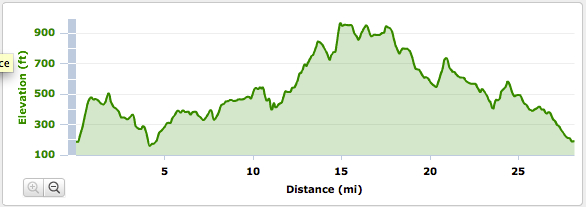
After the Hall we took a path left and the final checkpoint, a ‘self clip’ set in a wooden pathway was ahead of us. We now ran the final miles at a good pace. Navigation was easy and the terrain was good underfoot. After a few miles we came to a reservoir. We ran around the reservoir, through a park, past a bandstand and then suddenly we were back! 28.5 miles in the bag.

Back at the race HQ both Niandi and myself were told that we had made top 10. A good result considering a definite lack of pace due to the navigation. However, the result was not important, we had both had a fantastic day out on a stunning course with brilliant organization. At the finish we even had the treat of a finishing certificate, a ‘sew on’ patch and a meal of ‘Pie n Peas’ – a delicacy for Yorkshire. Have to say the pie went down really well…. nothing like creating a hunger with a long tough run. Of course I could feel even more smug….unlike Niandi I hadn’t had a whopping piece of chocolate cake at checkpoint 4!!!!