less cloud MORE SKY

2012 signifies a key moment in time for Skyrunning. Some 20 years ago, Marino Giacometti introduced a series of races to the world. In 1992 the first circuit was introduced. In the Alps on Adamello, Monte Rosa, Mont Blanc (summit) and then to Nepal for a race to Everest base camp at 5,200m altitude.

Over the years many mountains have been raced upon and many records have been broken, currently 23!

In 2008 it became a Federation, the ISF, International Skyrunning Federation. Currently the ISF has some 20 member countries and 3 associate members.

In an effort to continue delivering quality events and meeting the needs and goals of its participants, the industry and the sport, Skyrunning has evolved and that evolution has resulted at this significant moment in time, May 2012.

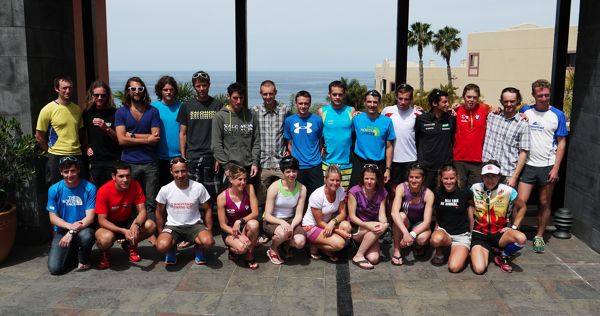
We are at the Transvulcania La Palma on the island of La Palma in the Canaries. Skyrunning have brought together one of the greatest ultra running fields ever, runners such as Kilian Jornet, Dakota Jones, Geoff Roes, Mike Wolfe, Erik Clavery, Sebastien Chaigneau, Joe Grant, D’Arcy Africa, Nikki Kimball, Anna Frost, Andy Symonds, Iker Karrera and so many more…

Yes, we ant to see a great race over what has been universally agreed as a ‘stunning course’ but Skyrunning also have another objective… With the race over and Dakota Jones crowned men’s champion and Anna Frost crowned ladies champion, a three day conference has been assembled to discuss the future of Skyrunning. It’s a key moment in time as not only is the Federation accepting that they need to move forward but they are also accepting that to move forward they need to listen to and discuss what the athletes, journalists, team managers and sponsors want. It’s refreshing to have such a forward thinking approach.

The conference ‘less cloud MORE SKY’ took place over three afternoons.

Day one showed all participants the history of Skyrunning. How it began, key moments, an introduction to the key athletes, a talk by ‘Sky Doc’ on the physical demands the sport places on its athletes and we also had some great video footage of races and events from the past.
Day two concentrated on media and in particular how social media can dictate how the sports future is made or broken. Athletes and journalists alike openly discussed how social media such as Facebook and Twitter are used to help get a message across to a media hungry public. Next day, a week later or even a month later is no longer acceptable for ‘News’. We want the news NOW and we expect it… It has it’s pros and it has it’s cons!
Day three I guess was the most important day. Although all participants had an opportunity to interact on the previous two days, day three discussed how the sport would progress and how the series would unfold. It was a great debate and all parties really did bring something to the table making Skyrunning look at its series of events, the locations that they use and how they can develop the sport so that European and non European runners have the opportunity to race on a level playing field.

Of course at this stage it was a point of discussion and the ISF now need to go away and discuss and bring together all that has been discussed over the last three days and formulate a plan for the future. It’s no easy task but I feel confident that in the hands of Marino Giacometti and Lauri Van Houten that the future of the sport is in safe hands. They are passionate about what they do, what they offer and they understand that although the sport needs to progress to the demands of the public, the participants and the sponsors they also know that they must not loose the roots of the sport and what makes it great.

With the inclusion of ‘Vertical’ and ‘Ultra’ circuits to the already very successful Skyrunner World Series the sport has exciting times ahead…

It is now important that we as athletes now work hard to ensure that our future in the sport is one of harmony, cohesion and importantly, as Marino and Lauri said, ‘in the spirit of the sport’ so that it’s future is secure.

We will face new challenges, new horizons and we must go to our respective home countries and/or federations and ensure that we remove the cloud so that we can all see MORE SKY!

Notes:

The ISF new formula world series offers a distance for every runner with three stand alone circuits and a combined title. Twenty spectacular races available across the world. Skyrunning offers more titles, more prize money and without a doubt, more kilometres and more altitude.

ISF MEMBER COUNTRIES
Andorra, Brazil, Bulgaria, Costa Rica, France, Great Britain, Greece, Hong Kong, Italy, Malaysia, Peru, Philippines, Portugal, Russia, Spain, South Africa, Switzerland, USA, and Venezuala.

Skyrunning Contacts
Skyrunning
info@skrunning.com

2012 CALENDAR
SKYRUNNER WORLD SERIES
Spain – Maraton Alpina Zegama-Aizikorri May 20
Italy – Giir Di Mont Skymarathon July 29
Switzerland – Course De Sierre-Zinal Aug 12
USA – Pikes Peak Marathon Aug 19
Malaysia – Mount Kinabulu Climbathon Oct 14

VERTICAL KILOMETER SERIES
Russia – Elbrus May 7
Greece – Gerania June 10
Italy – Dolomites Jul 20
Switzerland – Le KM vertical de Fully, Valais Oct 20
Spain – Puig Campana, Valencia Nov 11

SKYRACE SERIES
Russia – Elbrus May 9
Greece – Goura Coninth May 27
Italy – Dolomites Jul 22
UK – Snowdon Jul 21
France – Marathon Du Montcalm Aug 18

ULTRA SKYMARATHON
Spain – Transvulcania La Palma May 12
USA – Speedgoat 50k, Utah Jul 28
Italy – Trofeo Kima, Sondrio Aug 26
Spain – Cavalls de Vent, Pyrenees Sep 29
France – La Course des Templiers, Millau Oct 28

2012 SKY GAMES
RIBAGORZA ROMANICA, PYRENEES, SPAIN. JUNE 29 to JULY 8
Transvulcania La Palma Race Report

Transvulcania La PalmaInternational Skyrunning Federation

May 12th 2012

It was billed as the race of the decade and the 2012 Transvulcania La Palma race did not disappoint.

The International Skyrunning Federation had assembled one of the best mens field ever. It was a who’s who of ultra running; Kilian Jornet, Iker Karrera, Andy Symonds, Geoff Roes, Dakota Jones, Rickey Gates, Sebastien Chaigneau, Mike Wolfe, Francoise D’Haene, Casbeth Nemeth and in the women’s race, Anna Frost, Nikki Kimball, Darcy Africa, Corinne Favre and Nuria Picas.

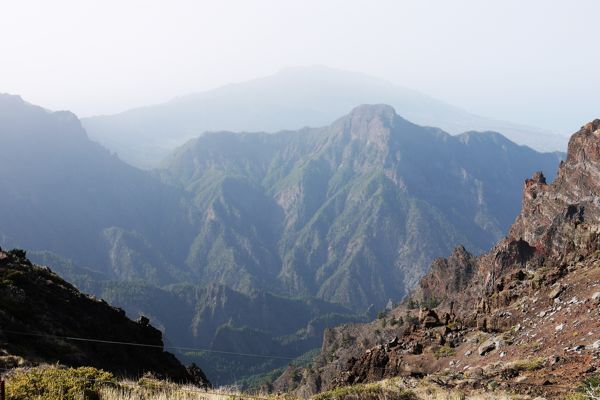
From the perspective of an ultra running fan and a journalist, this was a race to be involved in. The first race held in 2009 had a main objective, to use the hiking paths that linked the island and fulfill the needs of the ever growing demand for long distance events. Starting at the Faro de Fuencaliente (lighthouse) the course follows the GR131/ GR130 route going up the Ruta des los Volcanes in the Cumber Nature Park making a total distance of 83km and a total elevation of 8525m. It borders the Caldera de Taburiente National Park and goes down to Puerto dee Tazacorte before rising up slightly to the finish in Los Llanos de Aridane.

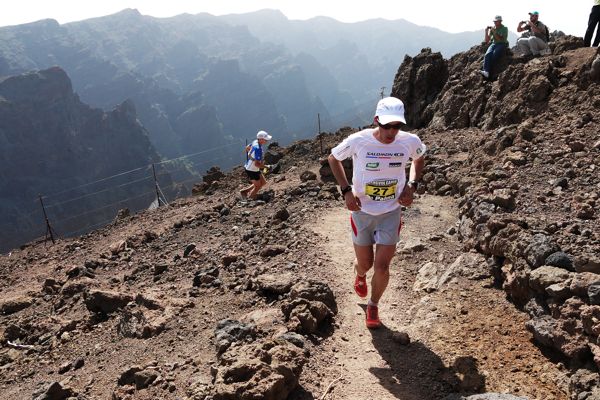
The race literally climbs some 53km fro sea level reaching the highest point on the course at 2426m and then drops down to sea level with a decent that the runners literally explained as ‘crazy’! The terrain is volcanic with black loose ash that moves under the feet, rutted and rocky terrain and of course the heat.

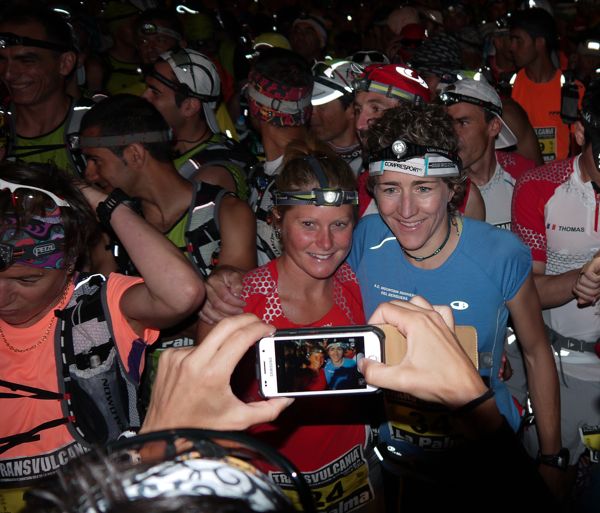
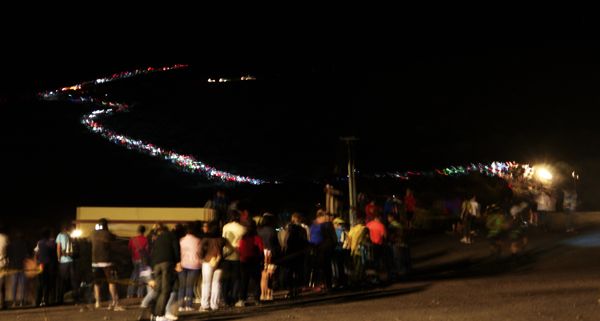
Leaving the start in pitch black at 0600hrs a stream of white headlamps moved towards the lighthouse, turned left and then headed up single track leaving a glow of flashing red lights in its wake. The early morning temperatures already gave us a sign that a hot day lay ahead.

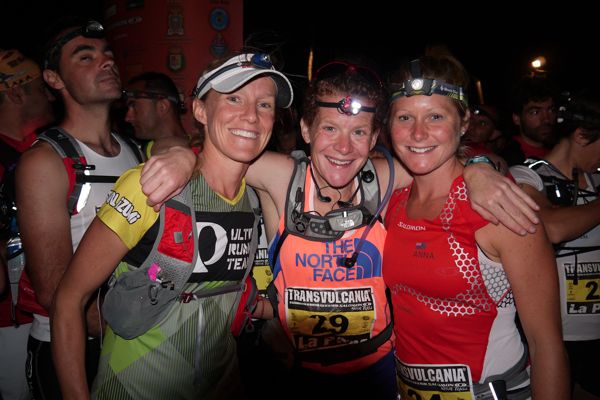
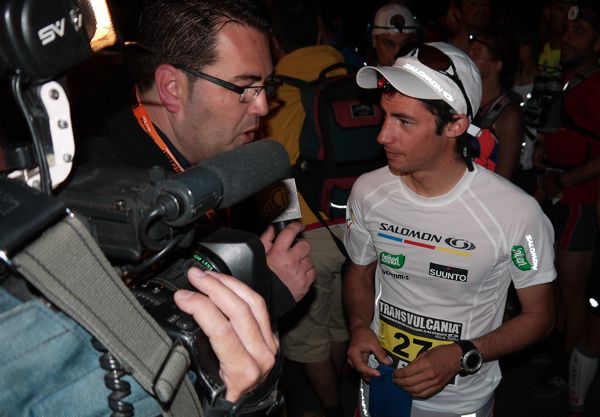
Kilian Jornet, Dakota Jones, Andy Symonds made the initial running pushing up the trail. In the ladies race Anna Frost headed first up the trail and set a pace that showed she meant business.

The course climbed up from sea level to Las Deseadas and then dropped down to Refugio De El Pilar and then slowly climbed its way up to the high point of the course at Roque De Los Muchachos before a drop of some 20km to Tazacorte and the final kick in the tail to Los Llanos.

Kilian and Dakota forged ahead on the trail followed by Andy Symonds. Behind them Francoise D’Haene, Iker Karrera chased but the two guys up front looked strong.

In the women’s race Anna Frost, ‘Frosty’ as she is affectionately known pushed ahead at a pace that was leaving the other women in her wake but also most of the men. She was pursued by Nuria Picas, Nikki Kimball, Darcy Africa and Corinne Favre.

In the mens race, some pre race favourites were not having a great day, Mike Wolfe said after the race that ‘it just wasn’t happening’ but he did hold on for 14th overall . Geoff Roes said that he ‘felt like he was running in marshmallow’ and Sebastien Chaigneau complained of lower back pain and stomach issues. The latter two dropped from the race at Roque de los Muchachos.


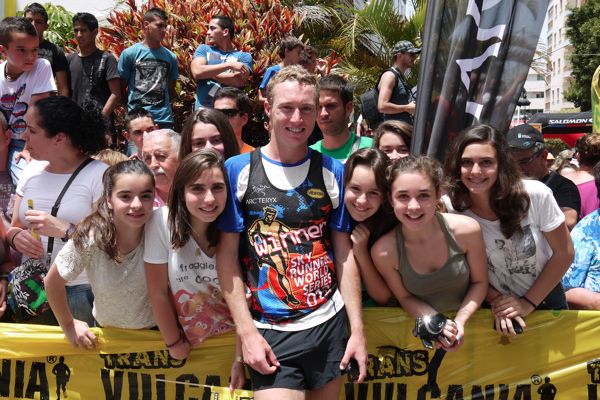
Ultimately, Frosty dominated the women’s race and broke the course record by an incredible 1hr 45mins to record a time of 8:11:30. Her run and effort also secured her a place of 13th overall ahead of notable names such as Mike Wolfe, Ian Sharman, Gustavo Reyes and Csaba Nemeth. Second and third went to Nuria Picas in 8:51:59 and Nikki Kimball in 9:10:00 respectively. Nikki was stoked by her run saying that it was the first run in 4 years that she had gone without knee pain. The emotion was clear to see in her eyes.

The mens race eventually became a real nail biter. At the highest point of the race we had a perfect long distance view allowing us to see the runners approach from kilometers away. It was incredible to watch as first Kilian appeared and then Dakota locked head to head, foot strike to foot strike in battle. Snaking up and down the trail they approached us, went through the feed and left but then suddenly Andy Symonds from the UK was in sight closing the gap. At the summit he told us ‘I feel good, lets bring it on’. He left with arms outstretched like a plane and jumped gazelle like on to the tough and technical decent to Tazacorte.

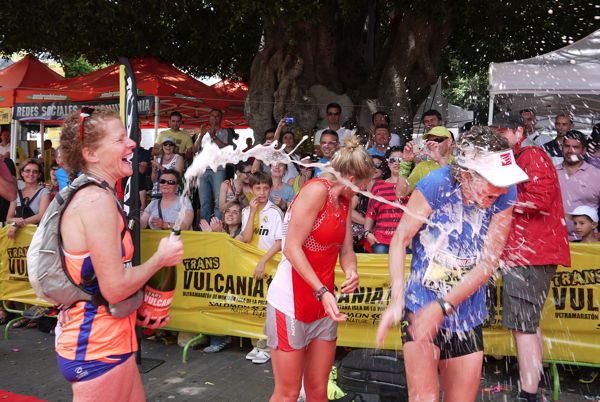
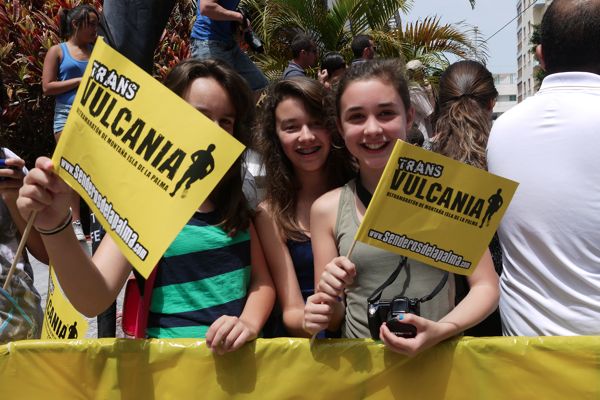
Waiting at the finish for the arrival of the runners it was party time. The whole town was out. It was like a stage finish of the The Tour de France or a section of the London Marathon course.

News came in that Andy Symonds had caught both Kilian and Andy on the decent and gone past them… apparently Kilian had followed and Dakota said after the race that he thought that was it and that ‘well, third will be good’.

But in Tazacorte Kilian was in trouble, maybe struggling from the heat, maybe struggling from dehydration or maybe just not on form after months of skiing. Andy was now in battle with Dakota but as he said immediately after the race ‘I just wasn’t strong enough, Dakota pulled away and I couldn’t keep up’. Dakota crossed the line in 6:59:07 smashing the old course record set in 2011 by Miguel Heras of 7:32:12.

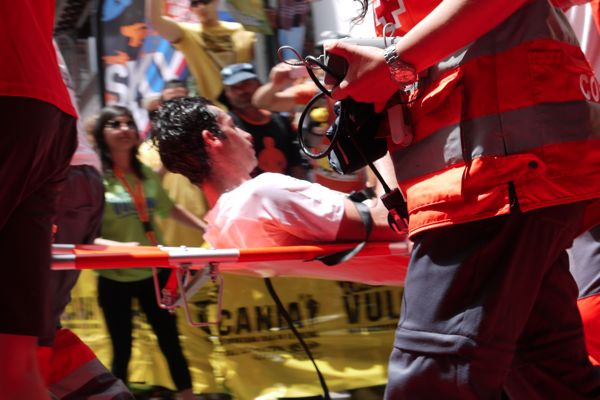
Andy arrived just 90 seconds later in 7:00:34 and Kilian arrived in 7:09:53. As he crossed the line his legs went from underneath him and he lay flat with exhaustion. Medics rushed to his aid and the crowd started to chant “Kilian, Kilian, Kilian” it was quite a moment and one that emphasized the importance of Kilian not only to the running community but to Spain alone. He later re emerged to speak to the crowd and assured them he was okay and thanked them for the support. He is a true ambassador.

Was the Transvulcania La Palma the race of the decade? Well from where I was on the course and at the finish, it sure was! However,  I do think it is a start of a new era in ultra running and I can only hope that what I witnessed on the Island of La Palma will be repeated time and time again. It’s a day and a race `I will never forget. Incredible. But in just a few days time we will be in Zegama… lets see what unfolds in the Pyrenees.

Mens Results

  1. Dakota Jones – Montrail – 6:59:07
  2. Andy Symonds – Salomon – 7:00:34
  3. Kilian Jornet – salomon – 7:09:53
  4. Francoise D’Haene – salomon – 7:23:40
  5. Iker Karrera – Salomon – 7:38:58

Women’s Results

  1. Anna Frost – Salomon – 8:11:30
  2. Nuria Picas – Icebug – 8:51:59
  3. Nikki Kimball – The North Face – 9:10:00
  4. Darcy Africa – Pearl Izumi – 9:17:35
  5. Uxue Azpeitia – 9:21:11

Hoka One One 2012 due to arrive March

HOKA ONE ONE

Introduction:

Hoka One One was the brainchild of Jean Luc Diard and Nicolas Mermoud. Both very experienced adventure racers and runners. Nicolas Mermoud has placed very highly at UTMB.

They set themselves an objective. To create a shoe that reduced fatigue, impact and muscle strain. Hoka One One was born.

Sponsored Athletes include: Dave Mackey (ultra runner of the year), Christophe Le Saux, Ludovic Pommeret, Maud Combarieu and Karl Meltzer (31 100 mile wins)

The Technology behind the shoe:

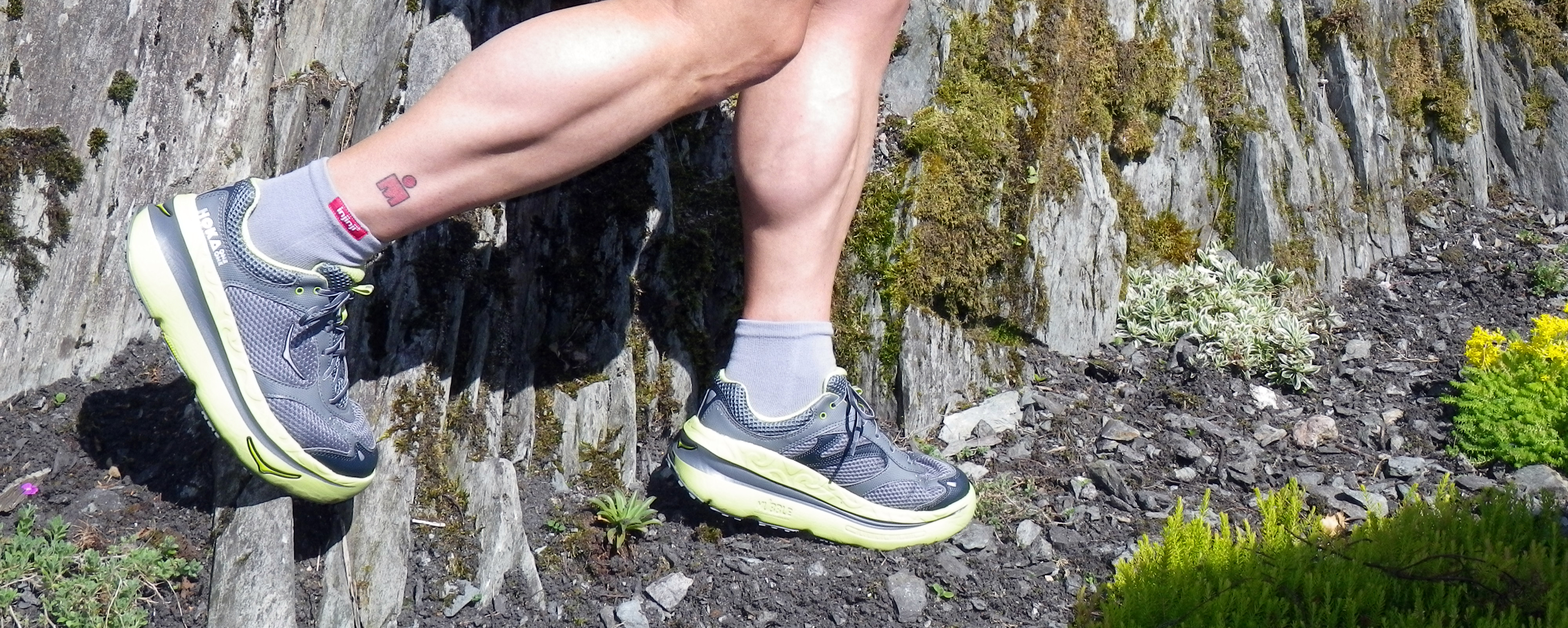
  • The sole is oversized up to 2.5x a conventional run shoe and therefore offers outstanding impact resistance. It ensures a natural stride and IMPORTANTLY they only have 4mm drop from heel to toe. They are therefore very much inline with the barefoot philosophies of natural foot strike and mid to forefoot running. In addition, the shoe eradicates any harshness from the terrain, allowing you to ‘run over’ obstacles. A good analogy would be the difference between a no suspension mountain bike and one with full suspension.
  • Within the shoe, your foot sits within a ‘bucket’ that is recessed into the sole. Not only does this offer a precision foot strike but it also offers great stability.
  • Despite looks, the shoes are incredibly light. They defy gravity. The combination of lightweight and great cushioning reduce stress and fatigue. The shoe adapts and moulds to the terrain allowing you to ‘run through’ the most difficult terrain.
  • A unique addition to the shoe is a ‘rolling’ sole. This helps deliver superior underfoot performance allowing your foot to ‘rock’ forward. Try them downhill…. You will fly! The rocker sole propels you forward.
  • The increased footprint of some 35% bigger than a conventional road shoe offers increased stability. The wider base compensates for the height of the sole making every foot strike a confident one.
  • Throughout the range of Hoka One One shoes, grip changes with each model. The Bondi B road shoe has less grip and traction to allow for speed, the Stinson B (was Combo XT) mixes between the Mafate trail shoe and Bondi B and provides a shoe that works well on either road or trail. The Mafate is designed for severe off road running and the newly modified Mafate 2 has a new upper and increased grip. The new shoe in the Hoka range is the Stinson Evo. This shoe has all the benefits of increased foot platform and cushioning but has been re-worked into a shoe that offers a race fit. It has a breathable upper, speed lacing, increased grip and reduced weight; it is an out and out race shoe!

Statistics:

  • Less Impact – Increase contact with the ground by some 45% and less impact by 20-33%
  • On the flat a reduction of energy consumption by -3 to 5% (oxygen+lactate blood measurement+running mechanical properties)
  • Uphill -8 to 18% decreased energy consumption
  • Downhill -15 to 20% reduced shock impact
  • Conclusion – Better performance for less effort and increased protection

The Shoes:

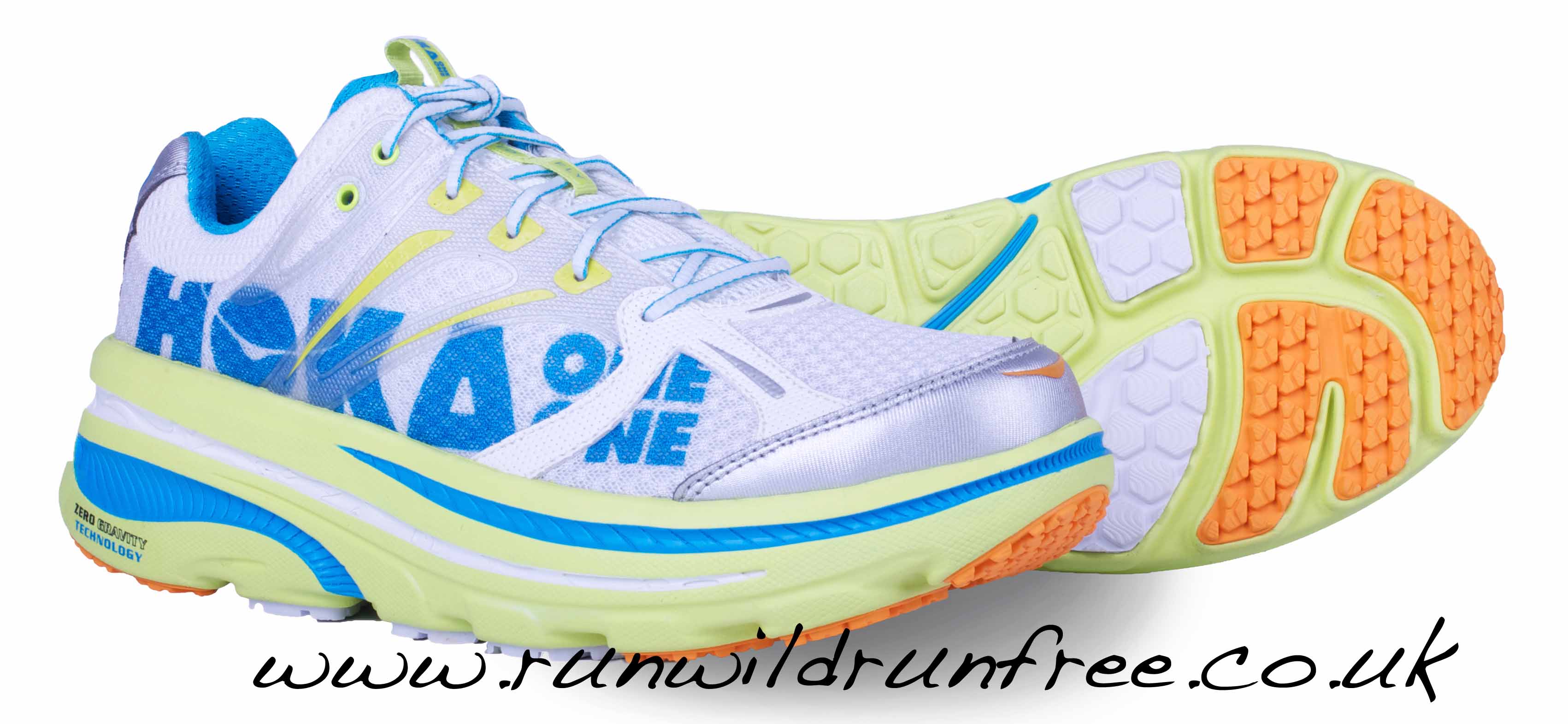
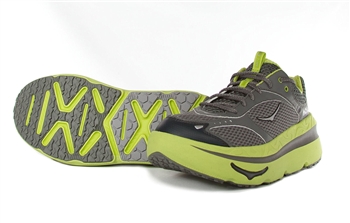
Bondi B – Road shoe

Bondi B by Hoka One One 2012

Bondi B is a high performance road shoe suited to marathon runners, triathletes and ultra runners. Bondi B absorbs impact, shocks and reduces fatigue. It has 2x EVA volume and a 50% rocker profile. It has a 20mm recessed bucket situated within the midsole and provides support and control as and when required.

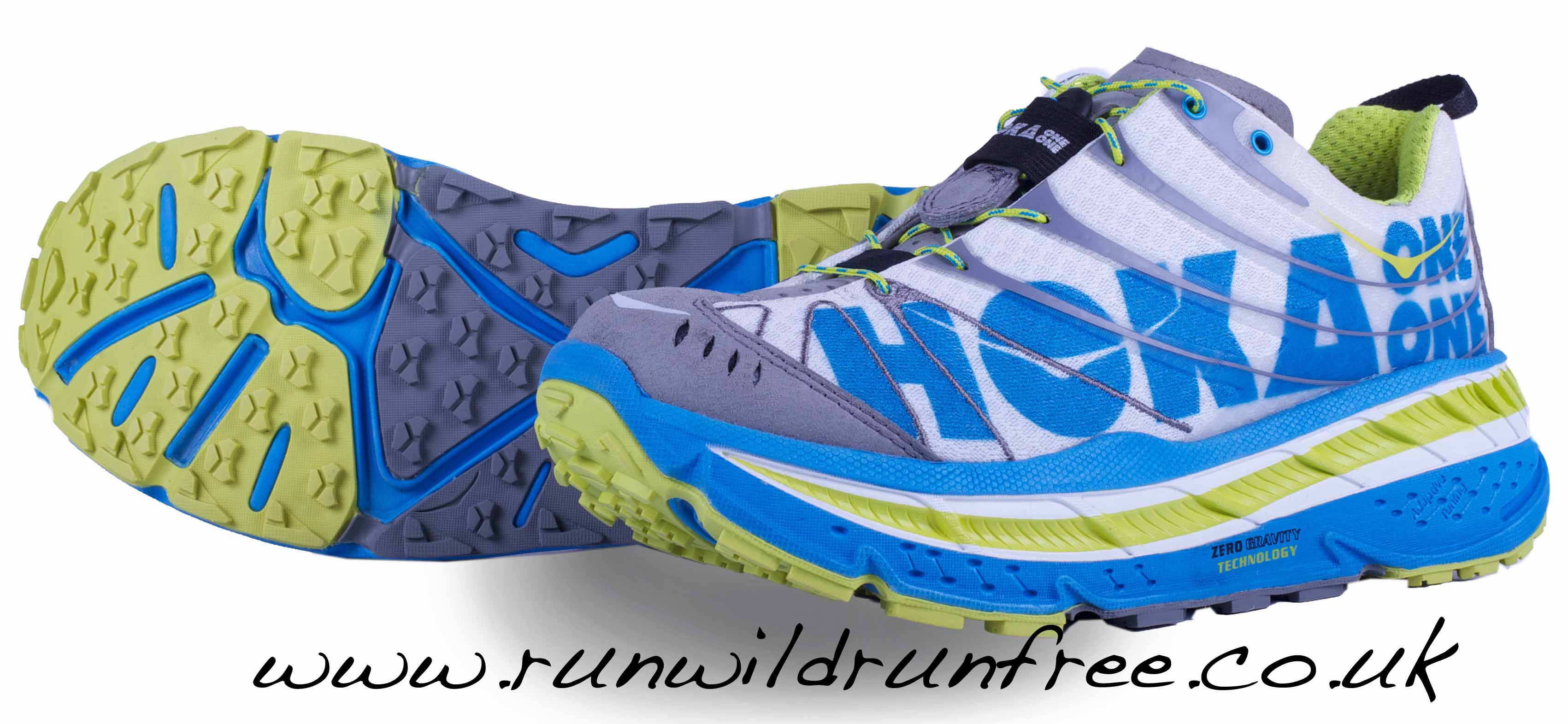
Stinson Evo – Trail

Stinson Evo/ Stinson B Evo by Hoka One One 2012

Stinson Evo is designed for absolute racing performance. It is the flagship of the Hoka One One 2012 range. It has a new outsole with EVA lugs to improve on weight. The surface profile has been altered to provide enhanced grip on mud and wet rocks. In addition, this grip provides superior uphill traction. The upper has been optimized to provide a precise racing fit with improved forefoot hold that balances weight and support. It has a quick lace system for rapid adjustment and the new upper has improved breathability. Revisions to the mid sole include a contoured sidewall which help reduce weight and it has a 25mm recessed midsole. The shoe has a 50% rocker profile, 2x2x EVA and recessed foot bucket.

 Mafate 2 – Trail

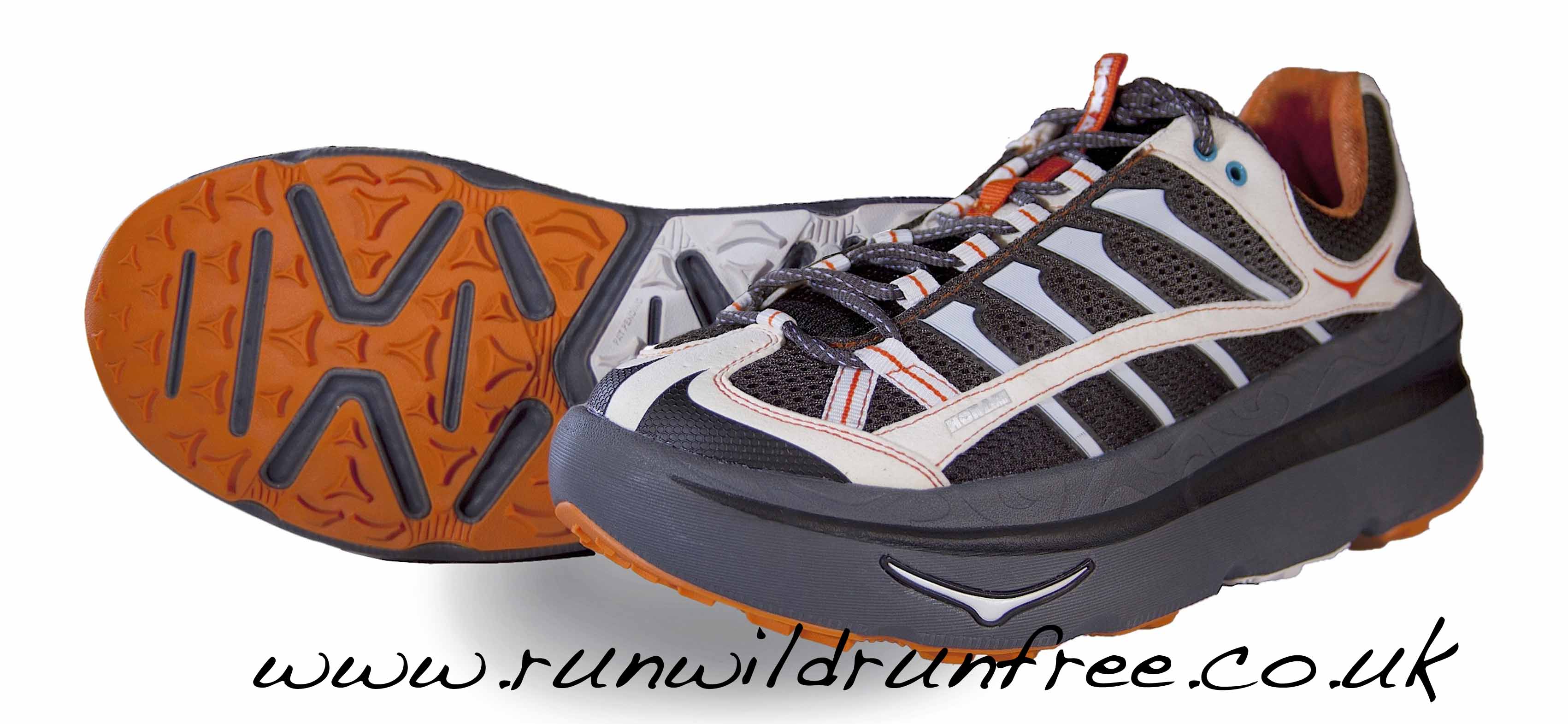
Mafate 2 by Hoka One One www.runwildrunfree.co.uk

Mafate 2 by Hoka One One


Mafate 2 is designed for tough terrain. It is designed around grip and support. The outsole has been overhauled over previous Mafate models and has a 4.5mm lug profile to offer superior grip. The upper has also been reworked to offer a precision fit and with a 30mm bucket within the midsole this provides a level of hold second to none. Lacing over previous models has also been adapted by adding an additional lacing loop allowing the runner to obtain a tighter fit if required. The shoe has 2.5xEVA and a 50% rocker profile. In addition, the Mafate 2 has a 35% wider foot platform over conventional trail shoes allowing you to ‘run through’ tough terrain.

Stinson B – Road & Trail

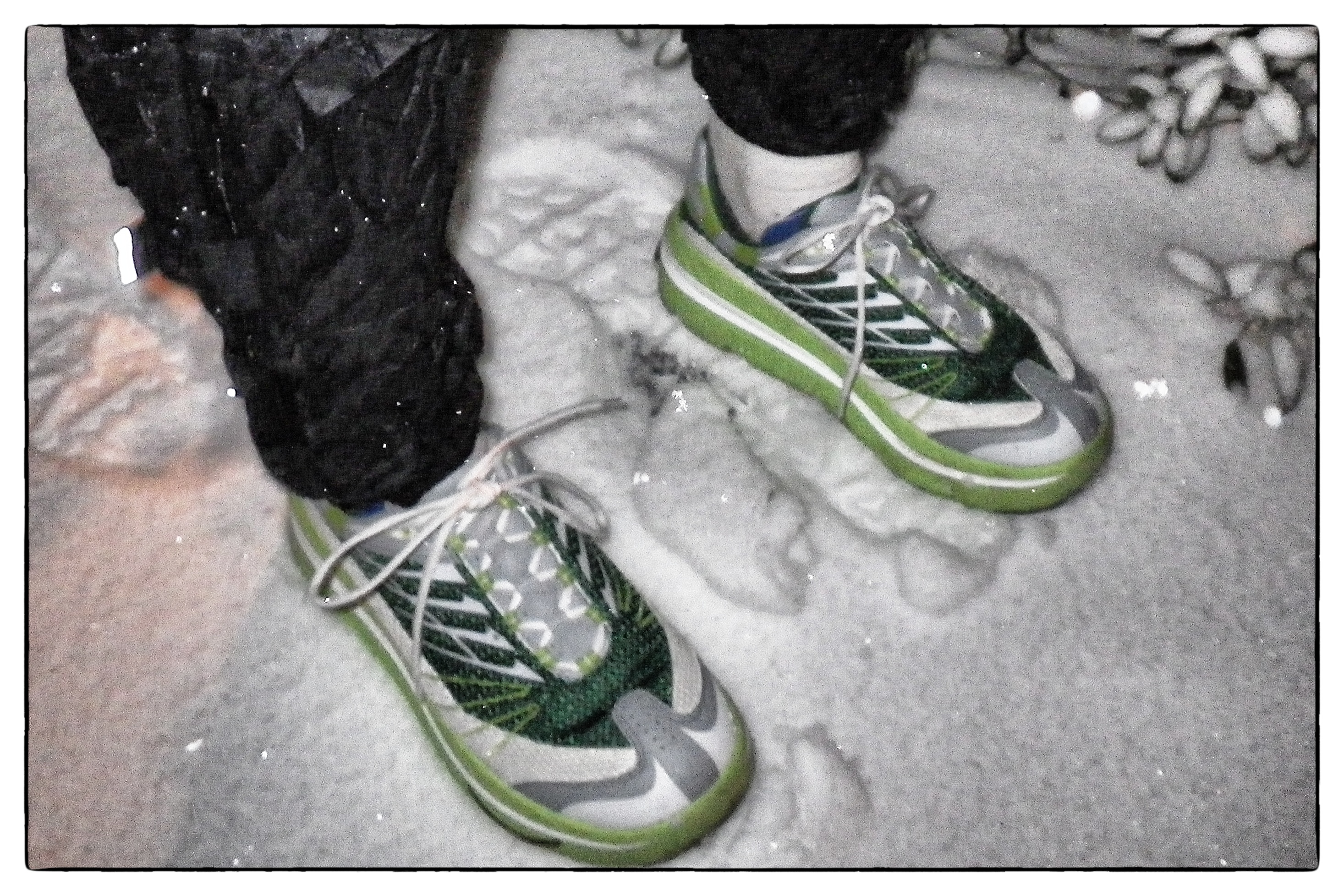
Stinson B by Hoka One One

The Stinson B, previously Combo XT (I am awaiting new imagery of the Stinson B, this is a 2011 model) is designed as a go anywhere shoe. It combines aspects of the Bondi B and Mafate. It has a 2.5x EVA and 50% rocker profile and has a tread pattern that is suitable for road and light trail. However, if the trail is hard, dry and rocky, this shoe realty does excel. It has a soft cushioned upper, a wider fit and it reinforces comfort without compromising support or stability. It has a 30mm recessed bucket and offers supreme protection.

In action:

http://www.youtube.com/watch?v=IH91KFK7ABE


Stock & Ordering:

2012 stock is due to arrive March 5th to 12th and is available from www.hokaoneoneuk.co.uk

 Analysis and Use:

Mafate by Hoka One One


First time impressions of the Hoka One One sometimes mean that potential users can’t get beyond the look of the shoe! Yes they are different and Hoka One One does not try to hide the fact. In fact, the contrary, they use strong bold colours that attract your eyes and your initial reaction on seeing them for the first time is ‘what the hell are they?’

Mafate Waterproof by Hoka One One


I had the same reaction. I saw them in a French Trail Race in 2010. A real tough mountainous event and in first place came through this lightweight athlete bouncing along and a pair of brightly coloured shoes. I took a second look…. and then a third and then a fourth look. I laughed to myself. But then I thought about it… hold on, this guy is in first place!

I stored the memory and then I saw them at another race, then I saw four or five pairs. I decided it was time to investigate and purchased a pair! Within 1 week I was sold… I was never going back!

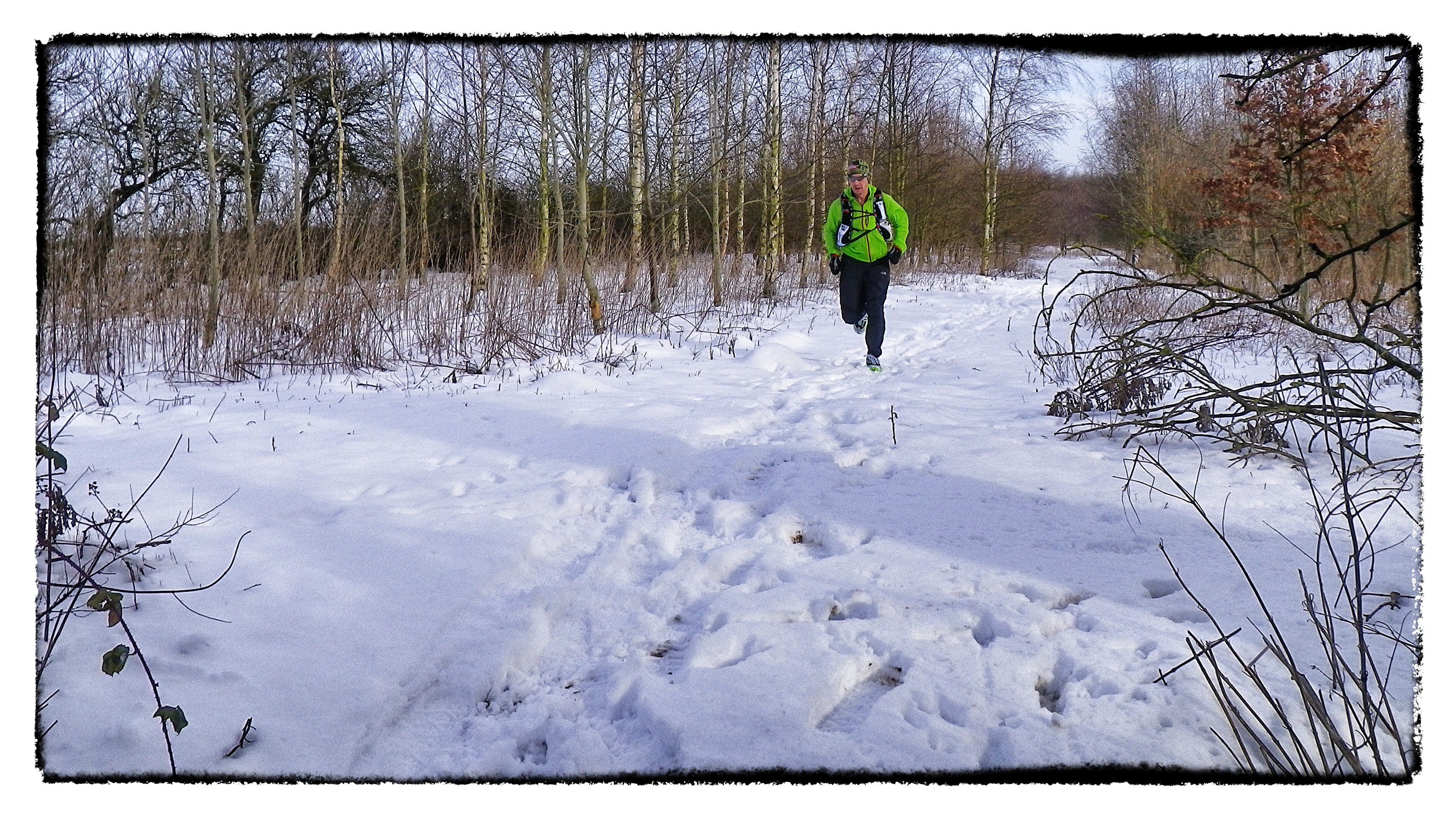
Hoka One One at UTMB 2011

I started with the Bondi B. I purchased them on a Friday. Walked in them all day Saturday and then ran a road marathon on the Sunday. It was liberating! I bounced along with an effortless glide and energy return from a shoe that I hadn’t felt before. As the miles ticked by I noticed considerably less fatigue, a notable reduction in impact and the key factor was that I found that they made me want to mid/ forefoot strike. I would say the only noticeable change I made to my gait and stride was that I took shorter steps and increased my cadence.

Not long after I purchased the Mafate for trail running. Believe me, if you are running on rutted, hard and rocky terrain the Hoka One One are the full suspension mountain bike of the run world. What was obstacles became just glitches that I could run through the terrain without worry… downhill the shoes excelled taking away the harshness of the terrain and allowing a comfort level never experienced when running downhill before. At the end of a race or training, fatigue and ‘doms’ were reduced significantly allowing for faster recuperation and an ability to train at a higher level on repeated days.

Time to Fly - Hoka One One

Observers would look at the shoes and in this barefoot/minimalist market would laugh! However, they missed the point….  Hoka One One only has a 4mm drop from heel to toe making this a real mid to forefoot shoe. A low differential is key for enabling runners to land in a ‘natural’ way. The difference with Hoka One One is the cushioning. All other manufacturers obtain a low differential by reducing cushioning; not Hoka One One. They offer all the benefits of a minimalist approach but with superior cushioning and comfort. It has now been confirmed in many aspects of the natural run movement that Hoka One One are inline with the philosophies of a more natural run style.

So, back in the UK I wanted to purchase the shoes! Mmmm stumbling block. Due to the uniqueness of the shoe, obtaining and shoes in the UK was extremely limited. So, as the saying goes of ‘putting your money where your mouth is’ I did just that and I started to sell the shoe.

In the final 6 months of 2011 and certainly in early 2012 I have noticed an increased awareness and acceptance of what Hoka One One can offer.

All I can say is, if you don’t like the looks, get over it! Once you put them on and run in them, you won’t mind. They are an experience to behold…

Stinson B by Hoka One One